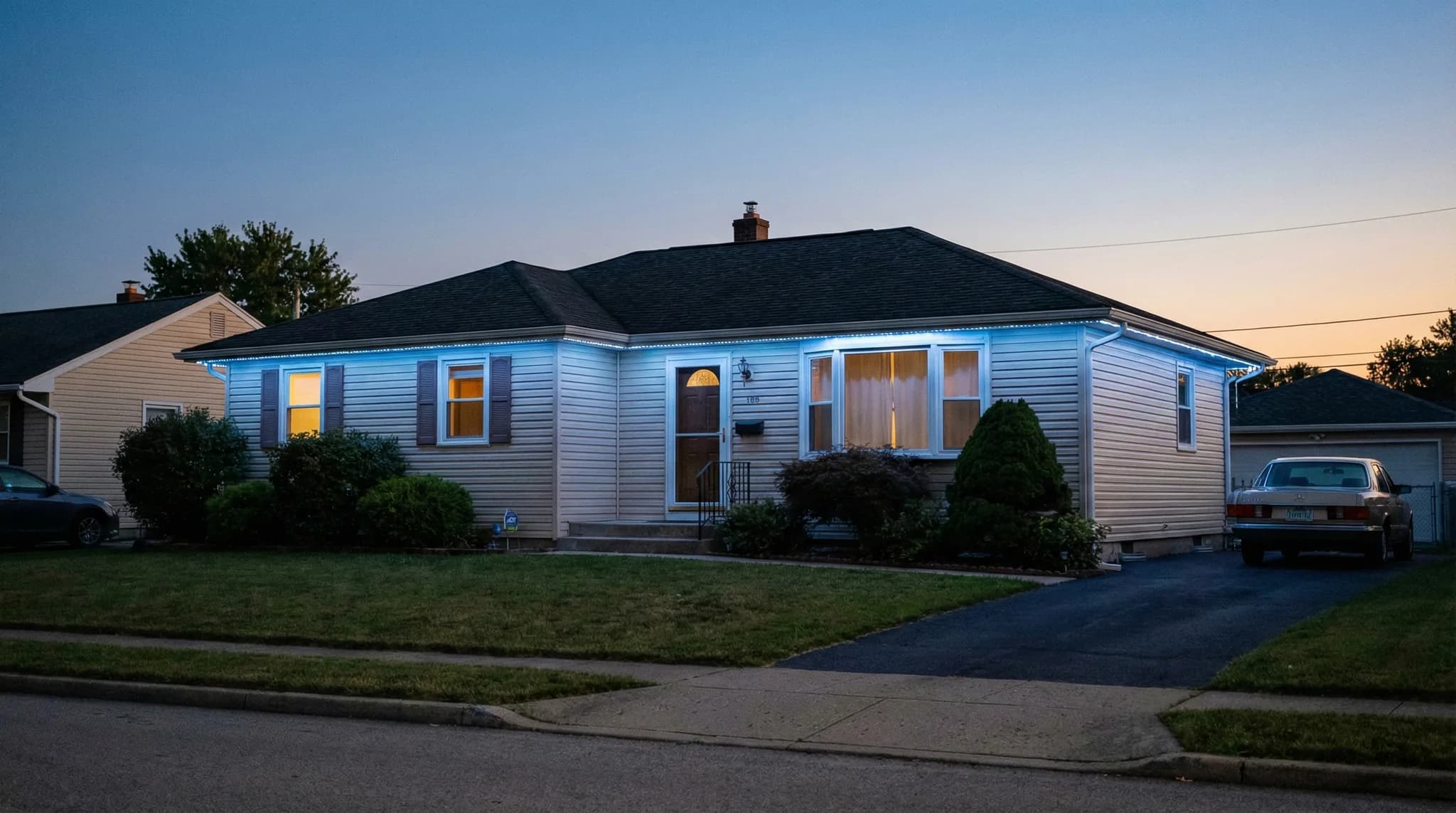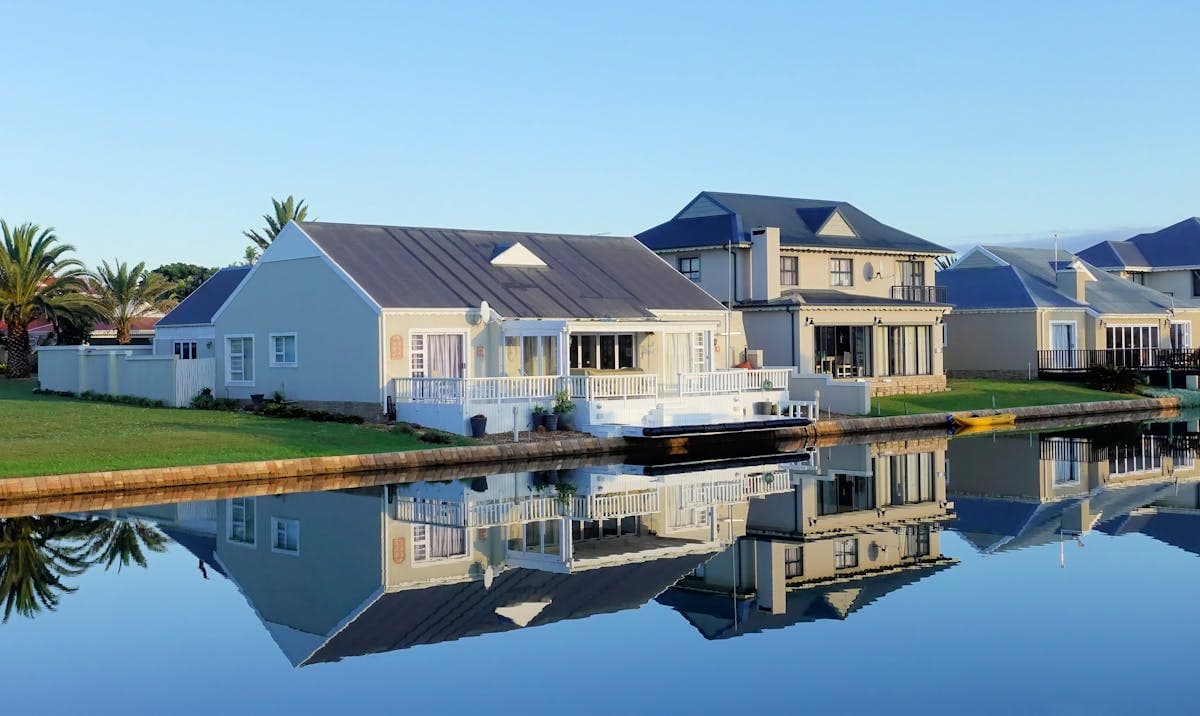
A Sacramento home running a mid-tier permanent outdoor LED system at 50% brightness, 2700K warm white – the everyday default Sacramento homeowners evaluate against RGB, RGBW, and RGBIC tiers when choosing a permanent lighting brand.
Knowing how to choose permanent outdoor lights in Sacramento comes down to seven measurable specs and a few local-climate variables, not the marketing pitch on the installer's website. The 2026 market in Sacramento, Roseville, Rocklin, Folsom, and Elk Grove offers more brand options than ever – Trimlight, Jellyfish, Gemstone, Oelo, EverLights, and our own EXT Lighting installs – and the quality gap between entry-tier and premium-tier systems has widened, not narrowed, in the last two years.
This buyer's checklist walks through every spec that actually affects how a permanent outdoor lighting system looks, lasts, and integrates with your smart home over a 15- to 25-year service life. Each section closes with a Sacramento-specific decision rule – what to insist on, what to walk away from, and what HOA, heat, and dark-sky considerations only apply in the Central Valley.
If you're still deciding whether the category itself is worth the spend, start with our permanent outdoor lights ROI analysis. If you already know you want them and are price-shopping, see the Sacramento pricing guide before getting quotes.
TL;DR: When buying permanent outdoor lights in Sacramento, prioritize seven specs in order: (1) RGBIC LEDs at 15–20 diodes per foot with CRI 80+, (2) individually addressable channel control, (3) Matter 1.4 + Thread 1.4 for Apple Home, Google Home, and Alexa, (4) mechanical fascia-mount aluminum track (never adhesive), (5) 24V low-voltage power, (6) UL listing plus 122°F operating rating for Central Valley heat, and (7) lifetime parts-and-labor warranty from a Sacramento-local installer. Budget $3,000–$5,000 for mid-tier on a typical 2,000–2,800 sq ft Sacramento home. Avoid quotes that omit chip type, mounting method, or labor warranty.
The 2026 Buyer's Checklist: 7 Specs That Matter
Every quote you receive should let you fill in this table on the spot. If the installer can't answer column-by-column without checking with corporate, that's a signal – either the system runs on franchise hardware the local crew doesn't fully understand, or the install team isn't the team that will service the system later. Both are red flags for a 20-year purchase.
| Spec | Entry Tier | Mid Tier | Premium Tier |
|---|---|---|---|
| LED Chip Type | RGB only | RGBW (dedicated white) | RGBIC (per-pixel addressable) |
| Diodes per Linear Foot | 10–12 | 15–18 | 18–24 |
| Color Rendering (CRI) | 70–80 | 80–85 | 85–95 |
| Smart Home Protocols | App only | App + Alexa/Google | Matter 1.4 + Thread + Apple Home |
| Mounting Method | Adhesive or staple | Screw-mounted aluminum track | Screw-mounted color-matched track + flashing |
| Voltage | 120V (some entry kits) | 24V low-voltage | 24V low-voltage + isolated controller |
| Warranty | 1–3 yr limited | 5–10 yr parts | Lifetime parts + labor |
| Sacramento Install Cost | $1,500–$3,000 | $3,000–$5,000 | $5,000–$8,000+ |
The single biggest predictor of long-term satisfaction in our Sacramento install data is mid-tier or premium-tier hardware (RGBW or RGBIC) on a screw-mounted aluminum track. Entry-tier RGB on adhesive mounts has the highest failure rate by year five – not because the LEDs fail, but because the adhesive lets go in 100°F+ summer cycling.
1. LED Quality: Bulb Count, Chip Type, and Color Rendering
LED quality is the spec installers and brand marketing pages obscure most. Three numbers actually matter: diodes per linear foot, chip architecture, and color rendering index (CRI). Get those three on every quote in writing.
Diodes per Linear Foot
Entry-tier systems pack 10 to 12 LEDs per linear foot, mid-tier runs 15 to 18, premium runs 18 to 24. More diodes per foot produce smoother light at lower brightness, better animation resolution, and less of the “dotted Christmas light” look that gives away cheap systems from the curb. For a typical Sacramento home with 180 to 240 linear feet of roofline, the difference between 12 and 18 diodes per foot is roughly 1,100 extra LEDs across the install.
RGB vs RGBW vs RGBIC
We covered this in depth in our RGB vs RGBW vs RGBIC comparison. The short version:
- RGB: Red, green, and blue chips mixed to approximate white. Cheapest, but the “white” reads slightly cyan or magenta depending on the firmware. Fine for holiday-only use.
- RGBW: Adds a dedicated warm-white chip for crisp, natural-looking everyday lighting. Sacramento year-round default.
- RGBIC: Each LED is individually addressable. Smooth gradients, chase patterns, school-color scenes – cinematic quality for game days, July 4th, and graduation parties.
Color Rendering Index (CRI)
CRI measures how accurately a light source renders colors versus sunlight, on a 0 to 100 scale. Anything below 80 makes your house siding, plants, and decor look washed out under the lights. Insist on CRI 80 minimum. Premium-tier RGBIC systems hit CRI 85 to 95, which looks notably warmer and more natural in evening photos – worth checking if your home is in a photogenic neighborhood like East Sac, Land Park, or Granite Bay.
Diode Density by Tier
2. Channel and Zone Control
Channel control determines how granular your scenes can be. There are three architectures on the market in 2026:
- Whole-system single channel: The entire install acts as one zone. All LEDs do the same thing at the same time. Cheap, but you can't light the garage in one color and the second story in another.
- String-based zone control: The system is divided into 4 to 16 zones, each independently controllable. Mid-tier standard. Lets you split front-elevation, back-patio, and side-yard scenes.
- Individually addressable RGBIC: Every LED is its own pixel. Unlimited zones, smooth gradients, chase patterns. The only architecture that produces truly cinematic animations.
For most Sacramento homeowners, mid-tier string-zone control is enough. Premium RGBIC matters if you plan to run game-day team colors, holiday patterns, or graduation party scenes regularly. If you'll run warm white 90% of the year, the RGBIC premium is harder to justify.
3. App and Smart Home Compatibility: Matter, Thread, Apple Home
This is the spec that changed most in the last 18 months. Matter 1.4 (released late 2025) and Thread 1.4 are now the cross-platform standards Apple Home, Google Home, and Amazon Alexa all support natively. For a 2026 buyer, Matter compatibility is the single clearest future-proofing signal on a permanent lighting system.
We have a separate deep-dive on Matter and Thread for permanent outdoor lights in Sacramento. The short version for buyers:
- Matter 1.4 certification means the lighting system pairs with whichever smart home platform you use – no proprietary bridge, no vendor lock-in.
- Thread 1.4 networking means the LEDs and controller mesh with each other and with other Thread devices (HomePods, Eve sensors, Apple TV 4K) for faster, more reliable response than Wi-Fi-only systems.
- Apple Home native support matters for iPhone-heavy Sacramento households. Without Matter, Apple Home users typically rely on Siri Shortcuts hacks rather than first-class integration.
- Google Home and Alexa native are now table stakes. Both work via Matter or via proprietary brand skills. Any 2026 system without Google or Alexa integration is dated.
Pro Tip: Ask the installer to walk you through pairing the system with whichever platform you use (Apple Home, Google Home, or Alexa) on a current install before signing. If the demo requires switching to a separate brand app to access basic scenes, the smart home story is weaker than the marketing suggests.
4. Installation Type: Track-Mounted vs Adhesive vs Direct-Screw
Mounting method is the single biggest predictor of whether your system is still on the house in year ten. Sacramento's climate kills every adhesive-based install eventually.
- Track-mounted (recommended): Aluminum channel mechanically screwed to the fascia with stainless steel screws, color-matched to the fascia paint. LEDs slide into the channel and are protected from UV, heat, and physical damage. Survives 100°F+ Sacramento summers without thermal failure. Industry standard for professional installs.
- Adhesive-mounted (avoid): LED strip stuck to the fascia with 3M VHB or similar tape. Cheap, fast, and fails. Sacramento surface temperatures on south- and west-facing fascia regularly exceed 140°F, which degrades adhesive bond within 2 to 4 summers. The strip then falls off in sections.
- Direct-screw (acceptable for some installs): LEDs mounted directly to fascia with small screws through the housing. Less elegant than track but mechanically sound. Used on some commercial installs and budget residential.
Color-matched track is the visual quality differentiator on premium installs. When the aluminum channel is sprayed to match your fascia paint, the system disappears in daylight. When it's left raw aluminum or generic white, it reads as visible hardware year-round. HOAs in master-planned Sacramento communities like Whitney Ranch, Stanford Ranch, Serrano, and Anatolia almost always require color-matched track for architectural approval – we cover this in the Sacramento HOA rules guide.
5. Power Management: 24V Low-Voltage vs 120V
This is one of the most over-explained specs in the industry. The practical answer for almost every Sacramento residential install is 24V low-voltage. Our deep-dive on low-voltage vs high-voltage permanent lights covers the engineering; the buyer's summary:
- 24V low-voltage: Safer (no shock risk at the LED), cheaper to install (no licensed electrician required for the LED runs themselves, smaller-gauge wire, no conduit on most runs), code-simpler (often no permit needed for the low-voltage portion), and produces no perceptible brightness or color difference from 120V on residential runs under 250 linear feet.
- 120V line-voltage: Required only on very long commercial runs over 300 linear feet where voltage drop on 24V becomes a real engineering constraint. Triggers electrical permits and licensed electrician requirements in most Sacramento jurisdictions. See our coverage of when permanent lights need a permit.
On a 2,000 to 2,800 sq ft Sacramento home, 24V is the right answer roughly 95% of the time. If an installer pushes 120V for a residential install without a clear engineering reason (extreme run length, very high LED count), ask why. The honest answer is usually that the brand only sells 120V hardware – which is a quote-shopping signal.
6. Warranty Terms and UL Listings
Warranty marketing is loud, warranty enforcement is quiet. Three things to verify in writing before deposit:
- Parts and labor coverage: A “lifetime warranty” that covers the LED chip but excludes the controller, power supply, channel, and labor is worth a small fraction of what it sounds like. Insist on parts and labor on the LEDs, controller, power supply, and channel – in writing.
- Who honors it: Franchise warranties depend on the franchisee staying in business. A Sacramento-local installer with a California State License Board number, 5+ year track record, and a fixed Sacramento-area office is more reliable than a national franchise dispatch. Confirm whether corporate or the local dealer is on the hook if the dealer closes.
- Transferability: Permanent lighting adds resale value (we covered this in outdoor lights sell house faster), but only if the warranty transfers to the next homeowner. Ask whether transfer requires a fee, registration, or new agreement.
On UL listings, look for the controller, power supply, and LEDs to each carry UL or ETL certification. Some imported systems carry only a CE mark, which is the European standard and not recognized for residential electrical safety in California. Ask the installer for the model numbers and certification documents – reputable systems will provide them on request.
7. Pricing Tiers: What $1,500 vs $5,000 vs $8,000+ Buys You
Permanent outdoor lighting in Sacramento ranges from roughly $1,500 at the entry tier to $8,000+ on premium residential and $10,000+ on estate-tier installs in Granite Bay, El Dorado Hills, and Loomis. Our full breakdown lives in the pricing-by-home-size guide; the buyer's checklist version:
$1,500 – $3,000 (Entry Tier)
RGB LEDs, 10–12 diodes per foot, 1–3 year limited warranty, single-channel control, often adhesive mount. Best for: a rental property, a starter home where you plan to upgrade in five years, or a homeowner committed to holiday-only use.
$3,000 – $5,000 (Mid Tier)
RGBW LEDs, 15–18 diodes per foot, screw-mounted aluminum track, zone control, 5–10 year warranty, Alexa and Google Home integration. Best for: typical 2,000–2,800 sq ft Sacramento home, year-round warm-white use with seasonal color, owner-occupied primary residence.
$5,000 – $8,000+ (Premium Tier)
RGBIC individually addressable LEDs, 18–24 diodes per foot, color-matched aluminum track, Matter 1.4 + Thread 1.4 + Apple Home, lifetime parts and labor, smooth animation library. Best for: a long-term home, a photogenic property where curb appeal matters, cinematic holiday and event scenes, integration into a Matter-based smart home.
$10,000+ (Estate Tier)
Premium hardware over 250+ linear feet of roofline, often combined with fence, gate, and column lighting and accent lighting on outbuildings. Common in Granite Bay estate homes and the larger Folsom and El Dorado Hills builds.
Decision Matrix: Which Tier Is Right for Your Use Case?
The simplest way to land on a tier: define your primary use case first, then pick the lowest tier that supports it. Buying up tiers you won't use is the most common Sacramento install regret we hear from second-time buyers.
| Use Case | Recommended Tier | Why |
|---|---|---|
| Holiday-only use, no animations | Entry | Solid-color scenes only; RGB is fine |
| Year-round warm white, occasional color | Mid | RGBW gives clean white the other 300 days/year |
| Full home accent, smart home native | Premium | Matter/Thread + RGBIC for animations and Apple Home |
| Rental property | Entry | Lower spec, lower theft and damage exposure |
| Estate / large roofline | Premium / Estate | Linear feet dominate cost; spec up while installing |
| Selling the house in 1–2 years | Mid | ROI tier; premium is hard to recoup at resale |
Sacramento-Specific Buyer Considerations
Three local variables change the calculus for Sacramento, Roseville, Rocklin, Folsom, and Elk Grove buyers compared to colder-climate markets.
100°F+ Summer Heat Tolerance
Sacramento sees an average of 21 days at or above 100°F each year and a recorded all-time high of 116°F. South- and west-facing fascia surface temperatures hit 140°F+ under direct summer sun. Insist on hardware rated to 122°F operating ambient minimum, with IP67 sealing and aluminum heat-sink housing on the LEDs themselves. Skip any system rated only to 104°F (40°C) – that's below Sacramento's recorded summer norm. See our deeper coverage in permanent outdoor lights and Sacramento extreme heat.
HOA Compliance in Master-Planned Communities
Most Sacramento-area master-planned communities (Whitney Ranch, Stanford Ranch, Serrano, Anatolia, Plumas Lake, North Natomas) require architectural review for permanent outdoor lighting. Color-matched track, warm-white default operation, scheduled curfew (typically 10 PM or 11 PM hard off), and no street-facing strobing patterns pass approval most reliably. Verify your HOA's rules before quote and ask the installer if they've done previous work in your specific community.
Dark-Sky and Light-Pollution Considerations
Sacramento has growing dark-sky awareness, particularly in foothill communities (Loomis, Auburn, El Dorado Hills) closer to truly dark observation zones. Choose downward-facing fascia-mount lighting (the permanent install standard, by design) over uplighting, keep color temperature at 2700K or warmer during late-evening hours, and use the scheduling features to hard-off the system at midnight. Our deep-dive on dark-sky compliant permanent outdoor lights covers the local ordinances.
Still narrowing down which tier fits your home?
EXT Lighting walks Sacramento homeowners through this checklist on every free property assessment. We'll measure your roofline, confirm HOA rules in your community, and quote each tier side by side so you can compare apples to apples. Request a free assessment →
How Major Sacramento-Market Brands Stack Up Against the Checklist
We maintain a detailed Trimlight vs Jellyfish vs Gemstone vs EXT Lighting comparison, but the buyer's-checklist read on the Sacramento market in 2026:
- Trimlight: Largest franchise footprint in Sacramento, most RGB and RGBW product lines, limited lifetime LED warranty (franchisee-dependent labor). Solid mid-tier choice.
- Jellyfish Lighting: RGBIC standard, 3-year LED warranty, smoother animations than Trimlight, fewer Sacramento dealers. Premium tier with the strongest animation library.
- Gemstone Lights: RGBIC, app-based control, midwest- and west-coast dealer network, mixed Sacramento reviews on installer consistency.
- EverLights: Older system, traditional bulb-style aesthetic, still installed in Sacramento – less aligned with 2026 RGBIC and Matter expectations.
- EXT Lighting: Sacramento-local, lifetime parts and labor, Matter 1.4 + Thread 1.4 on current installs, color-matched aluminum track standard. No franchise dispatch – the install crew is the service crew.
5 Common Mistakes Sacramento Buyers Make
- Buying entry-tier on a long-term home. RGB on adhesive saves $2,000 upfront and costs $4,000+ in replacement labor by year eight. If you plan to stay 10+ years, mid-tier is the floor.
- Skipping the color-matched track. Raw aluminum or stock white track reads as visible hardware year-round and fails most HOA architectural review on the first submission.
- Accepting a manufacturer-only warranty. If labor isn't covered, the warranty is a partial warranty. Insist on parts and labor in writing.
- Not asking about Matter compatibility. A non-Matter 2026 system locks you to the brand's proprietary app for the next 15+ years. Resale value, smart home integration, and firmware support all favor Matter hardware.
- Buying without checking HOA rules first. A few Sacramento HOAs restrict permanent lighting outright. More require specific track color, brightness limits, or scheduling curfews. Verify before deposit.
Questions to Ask Every Sacramento Installer Before Deposit
Bring this list to every quote appointment. Reputable installers will answer all of them on the spot without hedging.
- What LED chip architecture – RGB, RGBW, or RGBIC?
- How many diodes per linear foot?
- What's the CRI rating?
- Is the system Matter 1.4 certified? Thread 1.4?
- Mechanical screw-mount aluminum track, or adhesive?
- Is the track color-matched to my fascia paint?
- 24V low-voltage or 120V line-voltage?
- Operating temperature rating? IP rating?
- Lifetime parts and labor warranty – in writing, transferable?
- UL or ETL certification on controller, power supply, and LEDs?
- California State License Board number?
- How many installs have you done in my specific Sacramento neighborhood?
- Who services it if the system fails in year 8 – you, corporate, or a different franchisee?
For a deeper walk-through of installer evaluation, see our how to choose a permanent lighting installer in Sacramento guide.
Frequently Asked Questions
What should I look for when buying permanent outdoor lights?
Seven things in priority order: (1) LED quality – RGBW or RGBIC chips with 15 to 20 diodes per linear foot and CRI 80+, (2) channel control – individual addressable LEDs beat string-only zones for animations, (3) Matter and Thread compatibility so the system works with Apple Home, Google Home, and Alexa, (4) mechanical fascia mount with aluminum track, not adhesive, (5) 24V low-voltage power for safety and lower install cost, (6) UL listing and 122°F operating rating for Sacramento heat, and (7) lifetime parts-and-labor warranty backed by a local installer, not a franchise dispatch.
What features matter most in permanent LED lights?
Three features carry the most long-term value: individually addressable RGBIC LEDs (smooth animations and per-pixel scenes versus blocky RGB zones), Matter 1.4 with Thread 1.4 networking (future-proof smart home control across Apple Home, Google Home, and Alexa without proprietary bridges), and a 24V low-voltage architecture (safer, code-friendlier, and cheaper to install than 120V systems). Bulb count per linear foot (15 to 20 is standard, 18+ is premium), color rendering index (CRI 80 minimum, 90+ preferred), and aluminum heat-sink housing rated to 122°F round out the must-have spec list for Sacramento installs.
How do I compare permanent outdoor light systems?
Compare on eight axes side by side: LED chip type (RGB vs RGBW vs RGBIC), diodes per foot, color rendering index, channel/zone control granularity, smart home protocols (Matter, Thread, Apple Home, Google Home, Alexa), mounting method (mechanical fascia screw vs adhesive vs direct attach), voltage architecture (24V low-voltage vs 120V line-voltage), and warranty terms (parts and labor coverage, length, and who honors it). Request itemized written quotes that break out each of these specs – if a quote lumps them together or omits chip type and warranty terms, ask for the detail before signing.
How much should I budget for permanent outdoor lights in Sacramento?
Budget by tier and home size. Entry-tier RGB systems on a 1,500 to 2,000 sq ft Sacramento home: $1,500 to $3,000. Mid-tier RGBW systems on a 2,000 to 2,800 sq ft home: $3,000 to $5,000. Premium RGBIC systems with Matter/Thread support on a 2,800 to 4,000+ sq ft home: $5,000 to $8,000+. Estate-tier installs over 250 linear feet of roofline in Granite Bay or El Dorado Hills regularly cross $10,000. The single biggest cost driver is linear feet of fascia, not square footage of home.
Should I get RGB, RGBW, or RGBIC permanent outdoor lights?
RGBIC for animations and modern smart home use, RGBW if budget caps below $4,000, RGB only for the cheapest entry-tier installs. RGBIC (individually addressable) lets every LED act as its own pixel, producing smooth gradients, chase patterns, and cinematic scenes. RGBW adds a dedicated warm-white chip for cleaner everyday lighting at the cost of per-pixel addressability. RGB-only systems mix red, green, and blue to approximate white and are noticeably less crisp on warm-white scenes – fine for holiday-only use, weak for year-round home accent.
Do permanent outdoor lights need to be Matter or Thread compatible?
Strongly recommended in 2026. Matter 1.4 and Thread 1.4 are now the cross-platform standards Apple Home, Google Home, and Amazon Alexa all support natively, which means a Matter-certified permanent lighting system pairs with whichever smart home platform you already use – no separate proprietary bridge, no vendor lock-in. Non-Matter systems still work fine on their own apps today, but resale value, integration flexibility, and over-the-air firmware support all favor Matter/Thread hardware. If you're buying in 2026 and plan to keep the system 15+ years, insist on Matter 1.4.
Should I choose 24V low-voltage or 120V permanent outdoor lights?
24V low-voltage for almost every Sacramento residential install. 24V systems are safer (no shock risk at the LED, no licensed electrician required for the LED runs themselves), code-simpler (fewer permit triggers), cheaper to install (smaller-gauge wire, no conduit on most runs), and produce no perceptible difference in brightness from a 120V equivalent on a residential fascia. 120V line-voltage systems make sense only on very long commercial runs over 300 linear feet where voltage drop on 24V becomes a real engineering constraint.
What warranty should permanent outdoor lights come with?
Look for lifetime parts and labor on LEDs and aluminum channel, with the installer's name (not just the manufacturer franchise) on the warranty document. Standard manufacturer-only warranties cover LED chips for 3 to lifetime but exclude controllers, power supplies, and – critically – labor to diagnose and replace. A real lifetime parts-and-labor warranty from a local Sacramento installer is worth significantly more than a paper lifetime warranty from a franchise that may close in five years. Always verify the installer's California State License Board number and confirm warranty transfer terms at home resale.
Ready to See Each Tier Side by Side on Your Home?
EXT Lighting installs entry, mid, and premium permanent lighting tiers across Sacramento, Roseville, Rocklin, Folsom, and Elk Grove every week. Schedule a free property assessment and we'll measure your roofline, confirm your HOA requirements, and walk you through the 2026 buyer's checklist on-site – no obligation, no pressure.
Schedule Your Free Assessment