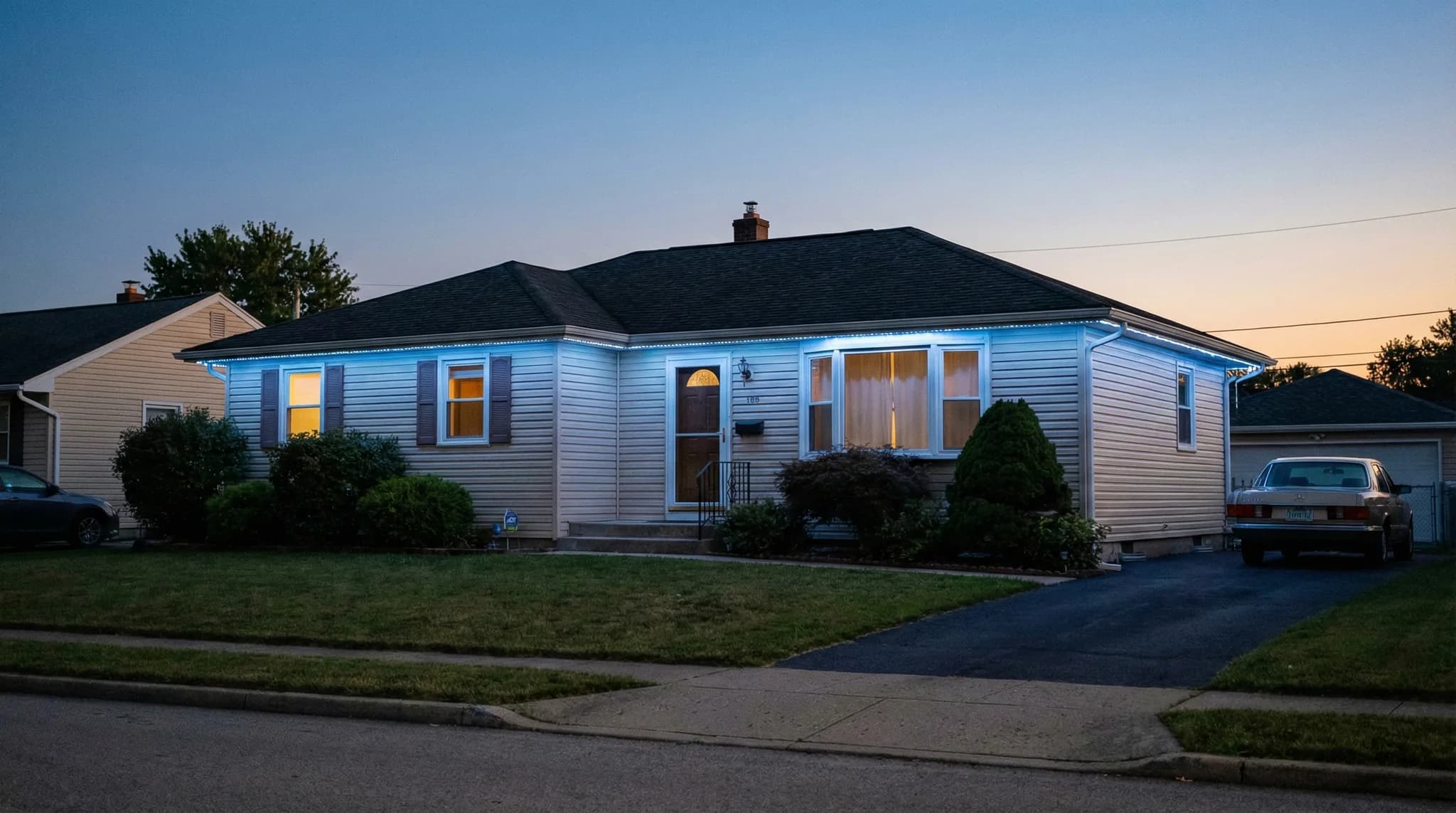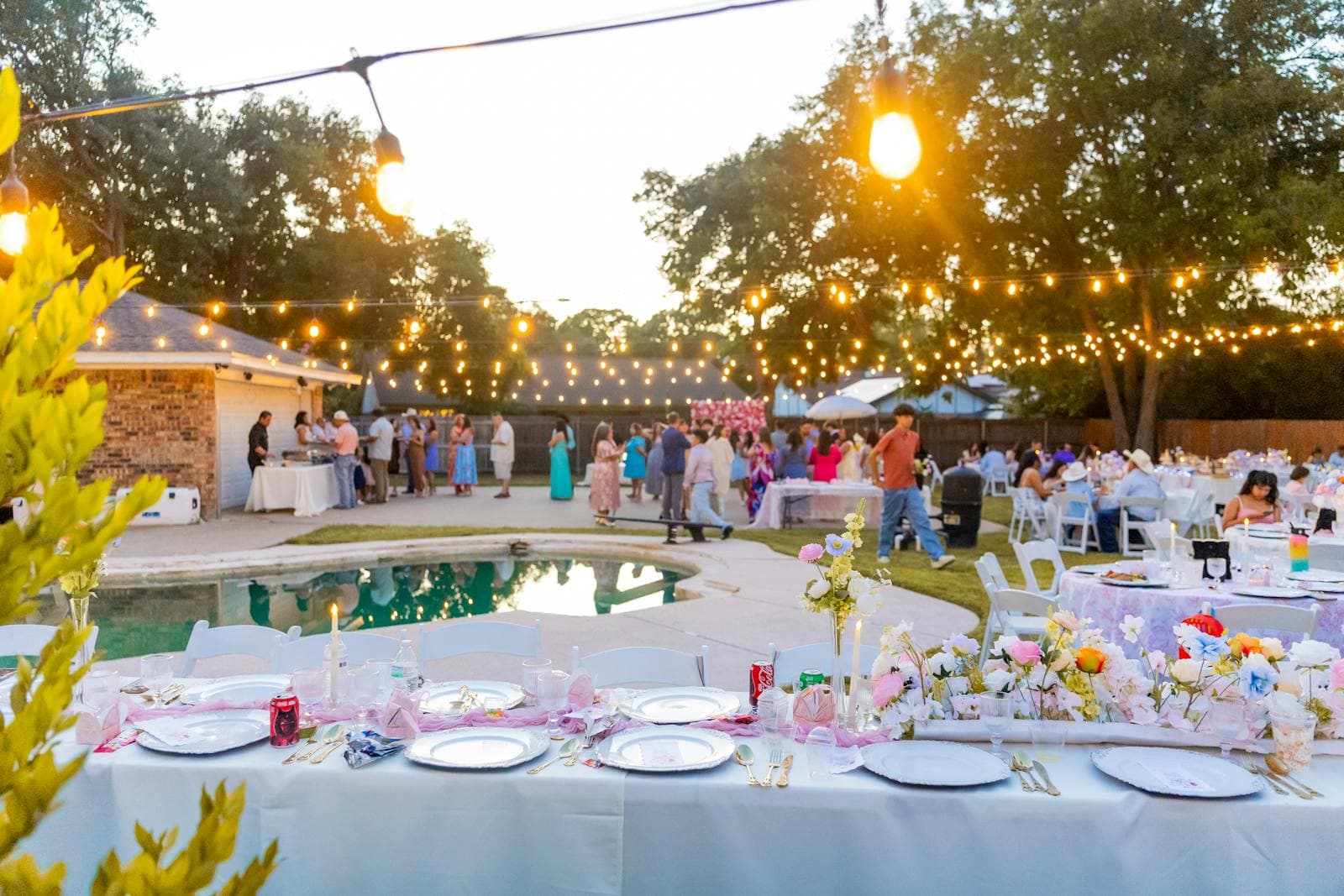
Permanent outdoor lights flip a Sacramento backyard into school colors for graduation in about 10 seconds – no rentals, no ladder, no tangled string lights.
The fastest graduation party lighting idea for a Sacramento backyard is the one already installed on your roofline. Permanent outdoor LED lights drop into the graduate's school colors from the app – Sac State green and gold, UC Davis blue and gold, Granite Bay Grizzly green, Jesuit blue and white – and stay there for the full weekend without any setup, takedown, or extension cords across the patio.
Sacramento-area high school graduations cluster between late May and mid-June 2026, with most ceremonies between May 28 and June 12, and backyard parties typically follow within the same weekend. If you have a graduate in the house this season, the lighting plan needs to be locked in before the diploma is. This guide covers the exact color hex codes for the schools Sacramento, Roseville, and Rocklin families actually attend, the scene presets that look best from the street and the patio, and the party-day timing tricks that turn the roofline into a co-host instead of an afterthought.
TL;DR: Yes, permanent outdoor lights can display school colors for a graduation party. Set the roofline to the graduate's primary school color using the official hex code (Sac State #00563F green, UC Davis #002855 blue, common HS colors listed below), save it as a scene named after the school, and schedule it to run from the day of the ceremony through the night of the party. Drop the patio and backyard lights to a warm 2700K dinner scene at sunset, then bump back up to school colors when guests arrive. Total programming time: under 15 minutes. Cost on top of the existing system: zero.
How Do I Light My Backyard for a Graduation Party?
Backyard graduation lighting works in three layers, and permanent outdoor lights cover two of them out of the box. Plan the layers first, then program the scenes around them.
- Roofline / fascia layer: Permanent LED lights run along the eave or fascia and define the silhouette of the house against the night sky. This is the layer that reads as “school colors” from the street and the deep backyard.
- Patio / pergola layer: Warm white string lights, pergola-mounted permanent lights, or under-eave LEDs over the dinner area. This layer needs to be warm and dim enough that people can see faces across the table.
- Accent / focal layer: A single visual moment – lit diploma display, photo wall, or a single uplit tree in the school's primary color. One focal point per yard; more than that pulls attention away from the graduate.
The mistake most Sacramento families make on the first graduation party they host is running the entire backyard in saturated school colors. The roofline absolutely should pop in green-and-gold or blue-and-gold, but the patio dinner area needs warm 2700K-3000K lighting so guests can actually see what they're eating. Save the saturated color burst for the photo wall, the cake table, and the roofline silhouette. For a deeper look at patio-specific lighting choices, see our patio and pergola outdoor lighting guide.
The Three-Scene Setup That Works for Every Graduation Party
Program these three scenes in your permanent lighting app before party week, then trigger them in sequence on the day of:
- School Colors (daytime / arrival): Roofline in full school colors at 80–90% brightness, patio at warm white 70%. Use 4 PM to sunset.
- Dinner Scene: Roofline drops to 60% school colors, patio drops to warm 2700K at 50%. Use sunset to 9:30 PM.
- Late Night: Roofline returns to 75% school colors, patio bumps to 60% warm white. Use 9:30 PM to midnight or auto-off.
Can Permanent Outdoor Lights Display School Colors?
Yes. Every RGB, RGBW, and RGBIC permanent outdoor lighting system in the Sacramento market supports custom hex color input through its app, which means any school color – college, high school, or middle school – can be programmed and saved as a one-tap scene. The hardware already supports 16.7 million colors; school colors are a tiny subset.
The trick is using the school's official brand color rather than a generic preset. “Green” on the color wheel can mean Sac State green, UC Davis green-when-it-borders-blue, or kelly-green soccer pitch green – and they look completely different on a roofline. Pull the exact hex code from the school's athletics or brand page and the scene reads as unmistakably that school from the curb.
Sacramento-Area College School Color Hex Codes
These are the four colleges Sacramento families send graduates to most often. Hex values come from the schools' official athletic brand guidelines:
- Sacramento State (Hornets): Green #00563F, Gold #C4B581. Primary green is dark and forest-leaning. Pair 4 green LEDs to 1 gold LED for the cleanest read.
- UC Davis (Aggies): Blue #002855, Gold #B3A369. The Aggie blue is deep navy, not royal blue. Easy color for LEDs to render. Run alternating 3-and-3 blue and gold.
- Sierra College: Red #C8102E, Black (LEDs off as pattern gap), White accent. Solid red roofline with white peak accents reads better than red-black alternation.
- UC Berkeley (Cal): Blue #003262, Gold #FDB515. Saturated Berkeley blue and bright California gold – one of the cleanest college palettes for LED rendering.
Sacramento-Area High School Colors
Below are the schools we get the most graduation party scene requests for. Pull the official athletics page if your school isn't listed:
- Granite Bay Grizzlies: Forest Green #003E2B, Gold #B3A369. Alternating 4-and-4 reads “Grizzly green” across the entire roofline.
- Jesuit Marauders: Navy Blue #1B264F, White, Black. Solid navy with white accents at the peak.
- St. Francis Troubadours: Royal Blue #1D428A, White, Gold #FFC72C. Alternating 3-and-3 blue and gold for high-energy color block.
- Folsom Bulldogs: Cardinal Red #8B1A1A, Gold #C4B581. Alternating 4-and-4 red and gold.
- Rocklin Thunder: Navy #001F3F, Silver/Gray #8E8E93, Yellow accents on signage. Solid navy with silver peak accents.
- Roseville Tigers: Orange #F38B00, Black (gaps), White. Solid orange with white peak accents – orange-black alternation reads as Halloween instead of school.
- Whitney Wildcats: Royal Blue #1D428A, Gold #FFC72C. Same palette as St. Francis; alternating 3-and-3.
- Oak Ridge Trojans: Royal Blue #1F3A93, Gold #B89D5C. Alternating 4-and-4.
- Vista del Lago Eagles: Navy #002855, Silver #8E8E93, White. Solid navy with silver pattern accents.
- Inderkum Tigers: Black (gaps), Orange #F38B00, Teal #008080 accent. Solid orange roofline.
Ready to light your graduation party in school colors?
EXT Lighting installs permanent outdoor LED systems across Sacramento, Roseville, and Rocklin — every system supports unlimited custom school color scenes. Get a free quote for your home.
What Is the Best Lighting for an Outdoor Graduation Party?
The best lighting for an outdoor graduation party is layered, dimmable, and zone-controlled. Permanent outdoor LED lights are the strongest single category because they cover the roofline silhouette and the patio overhead simultaneously, on one app, with school colors built in. Here is how the realistic options stack up.
| Lighting Option | Setup Time | School Colors | Reusable | Sac Cost |
|---|---|---|---|---|
| Permanent outdoor LED (existing) | 15 min app | Any hex color | Forever | $0 incremental |
| Rental string lights + balloon arches | 4–6 hours | Balloon color only | No | $350–$900 |
| Costco/Amazon string lights, DIY | 3–5 hours | No (warm white) | Maybe 1 reuse | $120–$280 |
| Color-changing party LEDs (e.g. PAR cans) | 2–3 hours | Limited presets | If purchased | $200–$500 |
| Solar yard lights only | 30 min | No | Maybe 1 season | $60–$200 |
For families weighing a one-time party setup against an installed system, see our breakdown on permanent outdoor lights vs solar lights and the long-tail math in our ROI guide.
Why Roofline Lighting Beats Tent Lighting for Backyards
Tent rentals and string-light kits work, but they fight the natural sight lines of a backyard. Guests in the yard look up and across at the house silhouette, not down at the tent canopy. Lighting the roofline in school colors gives every guest in the yard a constant visual anchor – the entire house becomes the backdrop for photos, toasts, and speeches. The patio layer then handles the practical task of letting people see their plates.
Pro Tip: If your house has a two-story facade or peaked gable visible from the backyard, the roofline lighting is even more effective. The peak becomes a focal element framed behind the cake table or photo wall. Sacramento, Roseville, and Rocklin two-story homes do this particularly well – see our two-story home installation guide for placement details.
How to Program a School Color Scene in Your Lighting App
The exact steps vary by platform, but the structure is consistent across Trimlight, JellyFish, Gemstone, EverLights, and EXT Lighting's own controller. Plan to spend 15 minutes the week before the party building these scenes.
Step-by-Step: Building the School Colors Scene
- Open your manufacturer's app and select your installation from the home screen.
- Create a new custom pattern or scene. Most apps call this “Custom Color,” “Create Pattern,” or “New Scene.”
- Switch the color picker to hex input mode and enter the school's primary hex code (e.g., #00563F for Sac State green or #003E2B for Granite Bay).
- Set the pixel count for that color – 4 LEDs is the most versatile group size for a clean read from 40 feet.
- Add the secondary color (e.g., #C4B581 gold) with the same 4-LED group size for alternating patterns. For solid-color schools, skip this step and run a single-color scene.
- Set the brightness to 80–85% for the arrival scene and 60% for the dinner scene.
- Name the scene with the school name and event (e.g., “Sac State Grad – Arrival”).
- Repeat with adjusted brightness for the dinner and late-night scenes.
- Open the Schedule or Timer section and tie each scene to specific times on the party date.
For RGBW Systems: Use the Warm White Channel for Dinner
If your system is RGBW (separate warm white channel) rather than pure RGB, the dinner scene benefits dramatically from running the warm white channel directly at 2700K instead of mixing RGB toward white. Pure RGB mixed to white reads as cool and slightly green; the dedicated warm white channel renders genuinely warm and flattering for people sitting at the table. For the technical difference between systems, see our RGB vs RGBW vs RGBIC explainer.
Color Temperature Reminder for Dinner Lighting
Warm 2700K is right for graduation party dinners. Anything cooler (3500K+) makes guests look washed out in photos and feels more like a workspace than a celebration. Save the cool whites and saturated school colors for the roofline silhouette. The patio overhead is warm; the roofline is colorful. That split is what makes the whole yard work. For more on choosing color temperatures, see our warm vs cool color temperature guide.
Sacramento Graduation Party Day Timing: A Sample Schedule
Most Sacramento-area backyard graduation parties run a 4-hour-to-all-day window depending on whether they kick off before, after, or in place of the actual ceremony. Here is the timing rhythm that works for the most common pattern: ceremony in the late morning or early afternoon, backyard party that same evening.
- 3:00 PM – setup window: Tables and chairs placed, photo wall hung, cake delivered. Roofline lights stay off to conserve LED hours during daylight.
- 4:00 PM – lights pre-trigger: Even in late May/early June Sacramento daylight, set the roofline to school colors at 80%. They're visible against the late afternoon sky and on by the time the first guests arrive at 4:30 or 5:00.
- 6:30 PM – speeches and toasts: Hold the roofline at school colors. Patio lights are still at warm 70%. Graduate gives short remarks or family speaks; the lit roofline frames the moment.
- 7:30 PM – dinner: Roofline drops to 60% school colors. Patio drops to warm 2700K at 50%. People can see their plates, faces look good in photos, school colors still dominant in the background.
- 9:00 PM – full dark, music up: Roofline back to 75% school colors. Patio bumps to 60% warm white. Dance floor mode if there is one.
- 11:00 PM – wind down: Roofline drops to 50% (HOA-friendly evening brightness). Patio holds at 60%.
- 12:00 AM – auto-off: Hard scheduled off. The entire schedule runs without anyone touching the app once the party starts.
Daytime Ceremony, Evening Party: Don't Forget Daylight Savings
Sacramento sits in Pacific Daylight Time during graduation season, which means sunset in late May runs around 8:15 PM and in early June pushes past 8:30 PM. Plan the dinner-scene transition for sunset, not a fixed clock time. Most permanent lighting apps allow sunset-relative scheduling (e.g., “30 minutes after sunset”) which means the transition lands at the right ambient light level whether your party is May 28 or June 11.
Graduation Photo Wall and Accent Lighting
Every graduation party has a photo moment. The decisive factor in whether those photos circulate on Instagram and end up framed on a mantel is lighting, not decor budget. Here is how to set up the photo focal area without extra equipment.
- Position the photo wall against an exterior house wall. The wall benefits directly from the roofline school-color light spill above it, which acts as a top-down color wash.
- Add one warm 2700K-3000K key light at eye level. A single battery-powered LED panel or even a soft work light aimed at where guests will stand. This fills in faces so the camera doesn't pick up only colored backlight.
- Skip the ring lights. They create the same flat, hard look every other graduation photo has. The combo of roofline color spill + warm key light is what makes the shot look like a real event instead of a photo booth.
- For a graduate solo shot, point a single uplight at the school's primary color through a potted plant or shrub behind the photo wall. This is the one place a true color accent works better than warm white.
Diploma Display and Cake Table
If the actual diploma is on display, position it on a table under the patio overhead lights at warm 2700K. Saturated color over the diploma washes out the printed gold seal and the parchment. Same rule for the cake: warm light makes the frosting look like dessert, cool or saturated light makes it look like prop food.
HOA and Neighbor Considerations for Graduation Lighting
Sacramento, Roseville, Rocklin, Folsom, and El Dorado Hills HOAs generally accept permanent outdoor lighting in seasonal or event colors, especially for milestone family events like graduations. The complaints that do come in almost always trace back to brightness and timing rather than the colors themselves.
- Cap brightness at 90% for the early evening school-color scenes. Save full 100% for the photo wall focal moment only.
- Hard step-down at 10:30 or 11 PM to 50% brightness. This single setting prevents the most common neighbor complaint.
- Hard off no later than midnight. Even on a Saturday graduation party night, midnight is the residential courtesy line in most Sacramento submarkets.
- No strobe or fast chase patterns. Slow fades and static alternating patterns are accepted; strobing is the main HOA and neighbor flag regardless of context.
- Give the neighbors a heads up. A two-line text (“Hosting Anna's grad party Saturday evening, lights will be in school colors until midnight”) defuses 100% of potential complaints in advance.
For specific HOA rules in the Sacramento area, see our HOA guide for permanent outdoor lights. For neighborhoods in Placer County, see our Roseville and Rocklin installation guide.
Hosting Beyond Graduation: Year-Round Use of the Same Scenes
Building school color scenes for a graduation party is a one-time 15-minute setup that pays off for years. Save the scenes in the app permanently, then reactivate them for every milestone moment that connects to that school: rivalry games, college sports championships, college acceptance announcements for younger siblings, even the next family member's graduation in 2027 or 2028.
Sacramento families who have built Sac State Hornets or UC Davis Aggies scenes report running them 8–15 nights per year long after the original graduation. The same logic that powers our NorCal game day team color guide applies to college spirit and graduation reunion nights. For broader entertaining ideas, see our backyard entertaining lighting playbook and our year-round uses guide.
What If You Don't Have Permanent Lights Yet?
If graduation season is the deadline that finally pushes the permanent lighting decision, the realistic timeline for a Sacramento installation is 2–4 weeks from quote to install for most single-story and two-story homes. That means a family booking the first week of May 2026 can have a fully programmed school-color scene running in time for a late May or early June 2026 graduation.
For families on a tighter window, the same crew that installs the permanent system can typically run a temporary install ahead of permanent – though most homeowners we talk to discover that the permanent system is actually the simpler path. There is no ladder, no rented equipment, no take-down, and the scenes built for the graduation party stay programmed for every future event.
See real installation pricing in our Sacramento cost guide and the comparison framework in our best permanent outdoor lights for Sacramento homes roundup.
Pro Tip: If you are evaluating systems specifically for graduation scenes, ask the installer to do a live in-app demo of custom hex input before signing anything. That confirms the system actually supports true school color rendering rather than approximate preset palettes. Three of the four major Sacramento installers we've evaluated do this well; one limits custom colors to a preset menu, which kills the school-color use case.
Get Your Graduation Party Lighting Locked In This Week
If your graduate's ceremony is in the next 30 days and you already have permanent outdoor lights installed, open the app tonight. Build the three scenes (Arrival, Dinner, Late Night) using the hex codes above, schedule them to the party date, and the roofline handles the rest. The whole programming session takes less time than a single trip to Costco for plastic balloon arches.
If you don't have permanent lights yet and graduation season is the trigger, EXT Lighting installs permanent outdoor lighting across Sacramento, Roseville, Rocklin, Folsom, El Dorado Hills, and the surrounding Placer and El Dorado County communities. Every system we install supports unlimited custom school color scenes and includes a lifetime warranty on parts and labor. Two-to-four-week install windows are typical for booking through mid-May 2026.
Frequently Asked Questions About Graduation Party Lighting
How do I light my backyard for a graduation party?
Use three lighting layers: a roofline / fascia layer in the graduate's school colors at 80–90% brightness, a patio / pergola layer in warm 2700K white at 50–70% brightness for the dinner area, and one focal accent on a photo wall, diploma display, or cake table. Permanent outdoor LED lights cover the roofline and patio layers from one app, with school colors programmable from the official hex code in under 15 minutes total.
Can permanent outdoor lights display school colors?
Yes. Every RGB, RGBW, and RGBIC permanent outdoor lighting system in the Sacramento market supports custom hex color input. Pull the official hex code from the school's athletics or brand page (Sac State #00563F green, UC Davis #002855 blue, Granite Bay #003E2B green, Jesuit #1B264F navy, etc.), enter it in the app, save the scene, and schedule it to the party date. Total setup time per scene: under 5 minutes.
What is the best lighting for an outdoor graduation party?
Permanent outdoor LED lighting is the strongest single option because it covers both the roofline silhouette and the patio overhead from one app, with school colors built in and no setup or takedown labor. For homes without permanent lighting, the next-best option is professional rental string lights plus a separate rental of color-changing PAR cans aimed at the house facade – though rental setups run $350–$900 and require 4–6 hours of setup the morning of the party.
When are most Sacramento high school graduations in 2026?
Sacramento-area high school graduations typically cluster between late May and mid-June 2026, with the bulk of public high school ceremonies running from May 29 through June 12. Sacramento City Unified often graduates first in the last week of May; Elk Grove, San Juan, and Folsom Cordova typically run early-to-mid June; Roseville Joint Union schools run early-to-mid June. Private and parochial schools (Jesuit, St. Francis) typically run early-to-mid June. Always confirm exact dates with the specific school.
How early should I program the school color scene?
Build the scene the week before the party. Programming, naming, and scheduling a custom school color scene takes about 15 minutes total for the three-scene arrival/dinner/late-night sequence. Test the scenes the night before the party at the actual brightness and pattern to confirm everything reads the way you want it to from both the street and the backyard.
What if my graduate's school isn't one of the common Sacramento schools?
Pull the official hex code from the school's athletics or brand identity page. Almost every high school and college publishes an official primary and secondary color with exact hex values for media and merchandise use. Enter those values directly into your permanent lighting app's custom color field. The principle is identical whether you're running Whitney royal blue or a small charter school's teal and orange.
Will school color lighting bother my HOA?
Rarely, when programmed responsibly. Sacramento, Roseville, and Rocklin HOAs treat permanent outdoor lighting in event colors as seasonal use, especially for milestone events like graduations. Keep brightness under 90% before 10 PM, step down to 50% by 11 PM, hard off by midnight, and avoid strobing patterns. Send a quick text to immediate neighbors the day before the party and complaints drop to near zero.
How much does it cost to add graduation lighting if I already have permanent lights?
Zero. School color scenes are a free software feature of any RGB, RGBW, or RGBIC permanent outdoor lighting system. The hardware already supports 16.7 million colors. You don't pay per scene, per color, per pattern, or per activation. Electricity cost is identical to running warm white – about $1–$3 per month at typical SMUD residential rates for the brightness levels recommended in this guide.