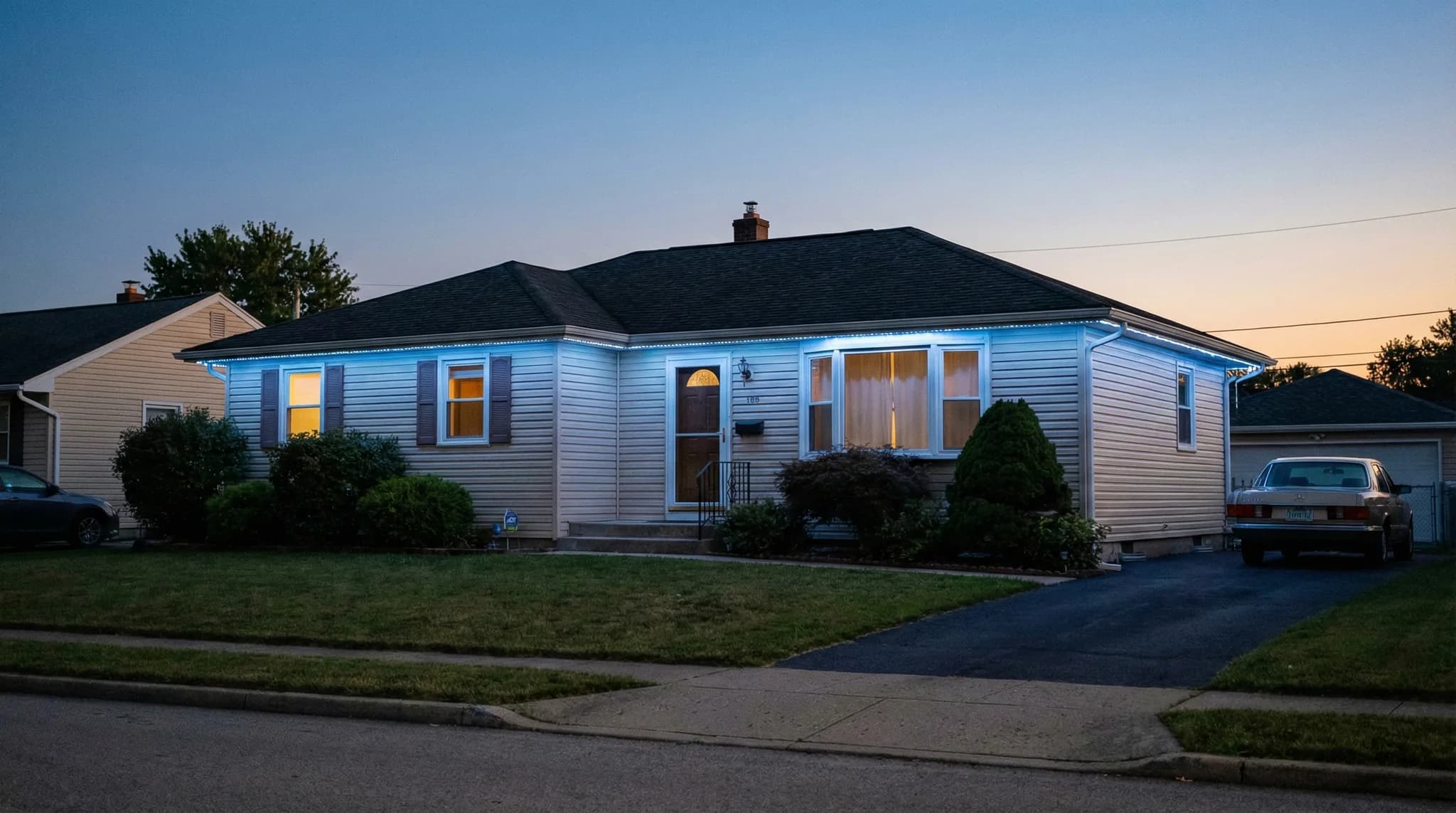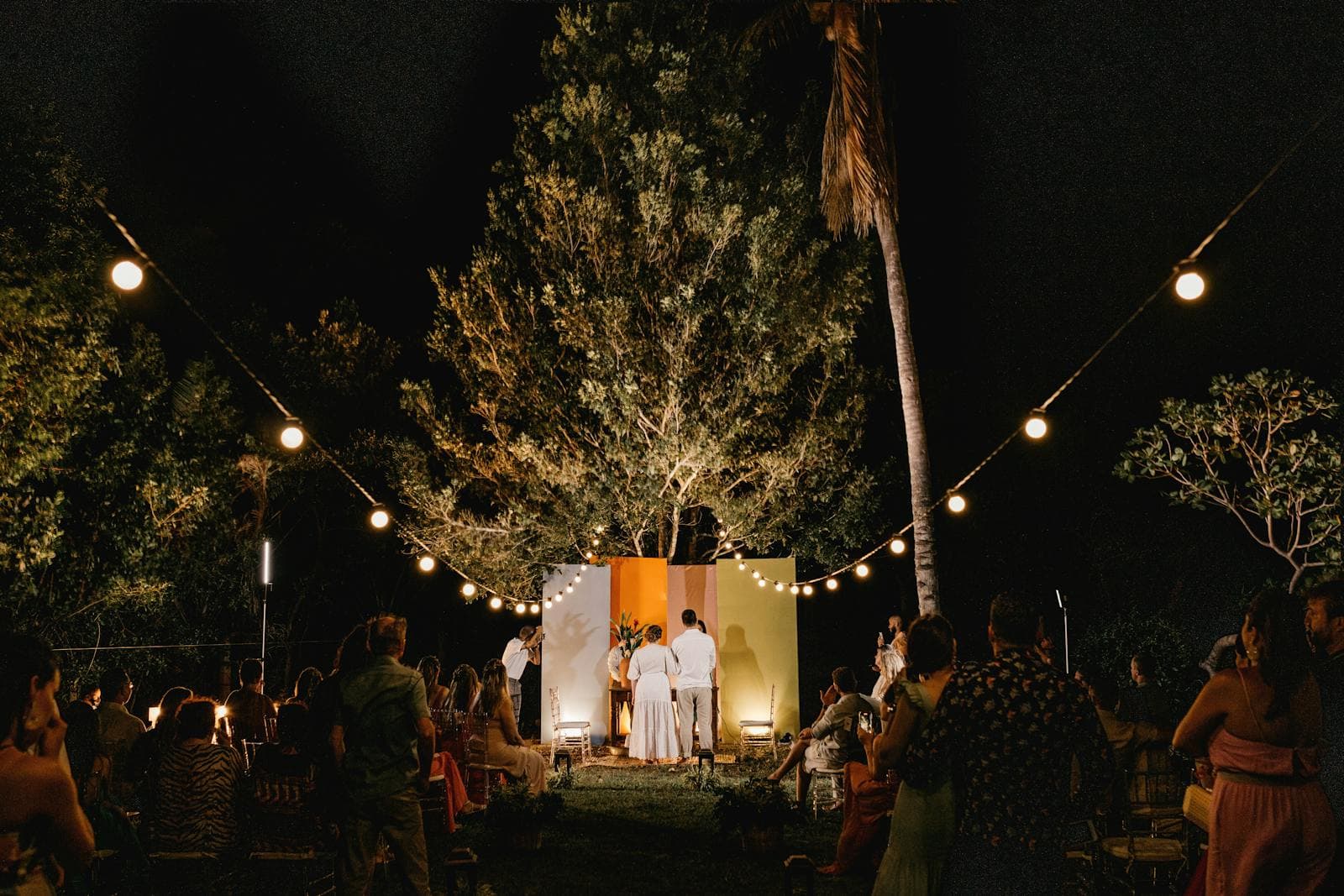
Permanent outdoor lights turn Sacramento backyards into wedding-ready venues – no rented bistro strings, no day-of setup crew, and no tear-down at midnight when the reception ends.
Permanent outdoor lights for weddings give Sacramento couples a venue upgrade that pays for itself across one ceremony, one rehearsal dinner, and every family gathering after that. Roseville, Rocklin, Folsom, and Sacramento backyards equipped with app-controlled LED systems shift from everyday warm white curb appeal to a full reception-ready ambient wash in under 30 seconds – no ladder rentals, no tangled bistro strings, and no day-of lighting crew billing by the hour.
This guide is for couples planning a Sacramento backyard wedding, homeowners hosting outdoor rehearsal dinners or anniversary parties, and ADU owners with detached entertaining spaces. We cover lighting zone layouts that match real ceremony and reception flows, the color and brightness presets that read as elegant rather than seasonal, the breakeven math against local rental quotes, and how Sacramento's late-spring through early-fall wedding season aligns with permanent lighting performance.
TL;DR: Permanent outdoor lights replace rented bistro strings and uplights for Sacramento backyard weddings and events. Use 2200K–2700K warm white at 50–70 percent for ceremony and dinner, build pre-saved “Ceremony,” “Toast,” and “Reception” scenes in the app, and zone the install across roofline, pergola, fence line, and walkway. Installed systems run $3,500–$8,500 in the Sacramento metro and replace $1,200–$4,500 in single-event rentals, breaking even after two to three gatherings. Sacramento's April-through-October wedding season averages 269 sunny days per year (NWS Sacramento Executive Airport), which means more usable evenings than nearly any other U.S. metro.
Why Sacramento Backyards Are a Strong Wedding Venue
Sacramento sits in USDA Hardiness Zone 9b with mild winters, dry summers, and a wedding season that effectively runs from late March through early November. The National Weather Service Sacramento Executive Airport station records an average of 269 sunny days per year and fewer than 60 days with measurable rain. That climate yields roughly 35 weekend evenings between May and October when an outdoor ceremony has a low rain risk and comfortable temperatures – a window most metros cannot match.
The local wedding industry reflects the demand. Sacramento-area venues like Park Winters in Winters, The Maples in Woodland, Scribner Bend Vineyards in the Pocket area, and Vizcaya Sacramento in Midtown book out 12 to 18 months in advance for peak weekends. Couples who cannot secure a venue, want a more intimate gathering, or prefer to avoid five-figure venue minimums increasingly turn to backyard weddings on family property – and that is where permanent outdoor lighting does the most work.
For homeowners with an existing entertaining setup, see our companion post on permanent outdoor lights for backyard entertaining, which covers everyday party use cases. This article focuses specifically on the higher production needs of weddings and major events.
Sacramento Outdoor Wedding Viability by Month
The chart above is the practical case for permanent outdoor lights in Sacramento backyards. Rather than building lighting infrastructure for a single Saturday in June, you are building it for six to eight months of usable evenings every year – with the wedding being one of the highest-production nights on that calendar.
Wedding Lighting Zones: How to Layer a Sacramento Backyard
A wedding-ready permanent lighting install differs from a basic curb appeal install in one specific way: zone density. Where a typical front-of-house roofline run uses two to three control zones, a wedding-capable install uses four to eight. Each zone matches a functional area in the ceremony or reception flow.
The five zones that matter most for Sacramento backyard weddings:
- Zone 1 – Main Roofline: Provides the ambient wash that frames the entire backyard. Set at 40–60 percent warm white during ceremony and dinner, 70 percent during speeches.
- Zone 2 – Pergola or Patio Cover: The most visible lighting layer for seated guests. Often the focal point during dinner. Set warmer (2200K–2400K) for candlelight feel.
- Zone 3 – Fence Line and Property Edges:Defines the backyard boundary and prevents the “dark void” look in photos. Set to 25–35 percent warm white.
- Zone 4 – Walkway, Driveway, and Arrival:Guides guest flow from cars to the ceremony seating. Set at 50–70 percent for safety and wayfinding.
- Zone 5 – Accent Features: Pool, water feature, fountain, specimen tree, or arch backdrop. Set independently – often slightly cooler (3000K) or in subtle color – to draw the eye.
Beyond five zones, weddings on larger Folsom or El Dorado Hills properties may add a sixth zone for a detached ADU, pool house, or outdoor kitchen. Read our guide to permanent lights for patios, pergolas, and outdoor living spaces for zone planning around covered structures.
Color Temperature and Brightness Settings That Read as Elegant
The single biggest mistake homeowners make when lighting an event with a permanent system is leaving the lights at the same daily setting used for everyday curb appeal. A 5000K cool-white roofline that looks crisp on a regular Tuesday will look sterile and clinical at a wedding.
For weddings, anchor the entire system to warm white in the 2200K–2700K range. This temperature mimics candlelight, flatters skin tones in photographs, and matches the warm color signature of professional event lighting. Reserve cooler temperatures only for cooking zones (where color accuracy matters for plating) and walkways at high brightness for safety.
Color Temperature and Brightness by Wedding Phase
Notice how brightness ramps up across the night while color temperature ramps slightly down. This pattern matches the way ambient light disappears after sunset. If you held the lights at one static setting across the entire evening, the early ceremony would look washed out and the late reception would look dim.
Pro Tip: Build all five wedding scenes (“Arrival,” “Ceremony,” “Cocktails,” “Dinner,” “Reception”) at least one week before the event and rehearse them at the actual time of evening. Light reads completely differently at 6:00 PM in May vs. October – adjust brightness percentages by 10–15 points per month of difference between rehearsal and event date.
The Real Cost: Permanent Lights vs. Wedding Rentals in Sacramento
Sacramento wedding lighting rentals fall into three tiers, based on local quotes from Bright Event Productions, Got Light, and a sample of independent vendors operating in the Sacramento metro and Wine Country corridor:
| Option | Single Event Cost | 5-Event Cost | What You Get |
|---|---|---|---|
| Basic bistro string rental | $1,200–$2,000 | $6,000–$10,000 | Edison strings, basic install/takedown |
| Mid-tier event lighting | $2,500–$3,800 | $12,500–$19,000 | Strings + uplights + onsite tech |
| Premium production lighting | $4,500–$8,000+ | $22,500–$40,000+ | Custom design, color washes, programming |
| Permanent outdoor lights (installed) | $3,500–$8,500 one-time | $3,500–$8,500 total | Owned system, app control, lifetime warranty |
For a single isolated wedding, basic bistro rental is still cheaper than installing a new permanent system. The math flips quickly when you factor in that almost every Sacramento household with a wedding-capable backyard hosts five or more memorable events over a 10-year ownership window: the wedding itself, the rehearsal dinner, an engagement party, holiday gatherings, and milestone birthdays. By the third event, permanent lights are dollar-for-dollar ahead of even the basic rental tier.
For more granular pricing, see our full Sacramento permanent outdoor lights pricing guide and our pricing by home size breakdown.
A Real Sacramento Wedding Walk-Through
Consider a Land Park homeowner planning a 60-guest backyard wedding for late September. The property has a 1,950 square foot single-story home with a covered pergola, a brick patio, a lawn area for ceremony seating, and a side-yard walkway from the driveway. The couple is choosing between renting full event lighting once or installing a permanent system they will keep.
- Ceremony seating area on the lawn (5:45 PM): Permanent fence-line lights at 35 percent provide the backdrop. Pergola lights at 50 percent illuminate the arch backdrop and officiant area. Roofline at 40 percent ambient.
- Cocktails on the patio (6:30 PM): Pergola brightens to 65 percent at 2400K. Walkway lights to 60 percent. Roofline holds at 45 percent. Pool accent zone activates at 25 percent in soft amber.
- Dinner under the pergola (7:30 PM): Pergola at 70 percent at 2200K (peak candlelight feel). Roofline at 50 percent. Fence line dropped to 25 percent. Specimen tree accent at 35 percent.
- Toasts and first dance (9:00 PM): Pergola briefly to 80 percent for visibility. Roofline to 60 percent. One subtle color flourish on the pool zone synced to the start of the first dance song (saved as an app scene).
- Send-off and exit (10:30 PM): Walkway and driveway zones jump to 80 percent for guest exit. Roofline to 70 percent. Pergola dims to 30 percent for cleanup crew.
All five scenes are pre-built in the lighting app a week ahead. On the wedding day, the homeowner's sibling or wedding coordinator triggers each scene at the planned timestamps from a single phone. No technician on site, no rental crew, no tear-down at midnight.
Planning a Sacramento backyard wedding or major event in 2026 or 2027? EXT Lighting designs event-capable permanent lighting systems in time windows as short as four to six weeks before the event date. Request a free on-site lighting design and we will map your zones, scenes, and rental-replacement math based on your actual property and guest count.
What Permanent Lights Cannot Do (Be Honest)
Permanent outdoor lights replace most rental scenarios but not all of them. Three event needs still typically require supplemental rentals:
- Open-lawn canopy lighting: If the ceremony or reception is held in the middle of an open lawn far from the house, fence line, or pergola, you may need a freestanding pole or canopy rental. Permanent lights illuminate fixed architectural lines.
- Dance floor wash and pinspots: A dedicated dance floor with pinspot lighting on the centerpieces typically needs rental fixtures aimed at specific tabletop targets. Permanent lights provide ambient, not directional task lighting.
- DJ-synced effects lighting: Beat-synced moving heads, color washes timed to the band, or strobe effects are not part of an architectural permanent system. If you want a club-style dance floor, plan a small rental package for that one zone only.
The practical pattern: permanent lights handle 80 to 90 percent of wedding lighting needs (ambient, ceremony, dinner, walkway, fence line, pergola, pool accent). For the remaining 10 to 20 percent (dance floor, canopy, DJ effects), supplement with a much smaller targeted rental. Total cost is still well below a full event rental.
Color Palette Programming for Wedding Themes
For couples who want their lighting to match a wedding palette, RGBW and RGBIC permanent systems handle the assignment. The key is restraint: full-saturation color reads as a Halloween or Kings game scene, not a wedding. Use color sparingly and at low saturation.
Recommended palette execution rules for weddings:
- Keep 70–80 percent of zones in warm white (2200K–2700K) throughout the event. Color is a garnish, not the main course.
- Apply color only to one or two accent zones (pool, fence line, or a specimen tree). Never apply color to the main pergola or dining zone.
- Drop color saturation to 30–50 percent. A blush wedding palette should read as a hint of warm pink, not neon.
- Sync brief color “moments” (toast, first kiss, first dance) to specific timestamps via app scheduling. Do not run color continuously through the dinner.
- Test palette saturation in person at the actual event time of evening at least one week before. Color reads very differently in twilight vs. full dark.
Read our best permanent outdoor lighting colors guide for season-by-season palette ideas, and our holiday lighting scenes and patterns playbook for the technical scene-building patterns that translate well to wedding programming.
Cumulative Cost: Wedding Rentals vs. Permanent Install
The breakeven against the most common Sacramento rental tier (mid-tier bistro plus uplights with onsite tech) lands at event two. Most Sacramento homeowners using their backyard for a wedding will hit five or more memorable events in the next decade between rehearsal dinners, anniversary parties, milestone birthdays, and holiday gatherings. Permanent lights pay back fast.
Local Sacramento Wedding Venues That Use Permanent Lighting
A growing number of Sacramento-area venues now have permanent LED roofline systems integrated into their property lighting. Couples booking these venues benefit from the same scene-based control, warm-white wedding programming, and zero-rental savings as a homeowner with a personal install.
Sacramento metro venues with documented permanent or architectural outdoor LED systems include private estate properties in El Dorado Hills, Granite Bay, and Loomis, as well as several boutique wineries and event barns in the Lodi and Wine Country corridors that have invested in permanent lighting since the 2023–2024 wedding seasons. Always confirm with the venue coordinator: ask whether the venue's lighting installer can build a custom warm-white wedding scene in advance, and whether color access is included or billed separately.
For homeowners hosting at home, see our local installation guide for permanent outdoor lights in Folsom, El Dorado Hills, and Granite Bay and our Roseville and Rocklin local guide for area-specific permitting and HOA considerations.
Working With Wedding Vendors When You Have Permanent Lights
Most professional Sacramento wedding photographers, planners, and videographers welcome a permanent lighting setup once they understand what is on offer. The conversation goes more smoothly when you give them three pieces of information ahead of the event:
- Color temperature in Kelvin: “Our pergola will be at 2400K, roofline at 2700K.” This lets photographers calibrate their cameras and videographers white-balance correctly.
- Zone map and brightness levels: A simple sketch of which zones are at what percentage during each phase. This helps photographers know where to position for the strongest fill light.
- Scene timing schedule: When each scene activates (5:30 PM Arrival, 6:00 PM Ceremony, etc.). Vendors can sync their equipment and shot list around your lighting transitions.
Many photographers report that warm-white permanent LED systems at 2200K–2700K reproduce better in photos than rented Edison bistro strings, which often run hotter (3000K+) and create mixed-temperature challenges when blended with golden-hour daylight. The downside: permanent LEDs are very even, so videographers may want a small directional fill rental for keylight on speeches and the first dance.
Timeline: When to Install Permanent Lights for a Sacramento Wedding
Sacramento permanent lighting installers have lead times that vary seasonally. Plan backwards from your wedding date with these benchmarks:
- 12+ months out: Best window. Allows for a calm design consultation, multiple rounds of zone planning, and an install in any season without rushing weather windows.
- 6–9 months out: Comfortable lead time. Most installers can schedule an install within four to six weeks, leaving months of evening rehearsal time to refine your scenes.
- 3–5 months out: Tighter but still workable. Permanent install completes in one to two days. Allow at least a month of evening testing to dial in scene brightness.
- Under 8 weeks out: Tight. Most installers can still fit the install, but custom zone configurations and complex programming may be limited. Confirm scheduling availability immediately.
For seasonal install timing, see our guide on the best time to install permanent outdoor lights in Sacramento. Sacramento's mild winters allow installs nearly year-round, but spring and early summer get booked first for wedding-driven projects.
Mini Case Study: A Granite Bay Anniversary Party
A Granite Bay homeowner installed a 240-foot RGBW permanent system in late 2024 across the home roofline, two pergolas, and a fence line bordering a small vineyard plot. The installation cost $7,200. In the following 18 months, the property hosted:
- A 75-guest 25th anniversary party in May 2025
- Two adult-child birthday celebrations
- A Thanksgiving dinner for 22 with a custom autumn palette
- A Diwali gathering with a custom warm gold scene
- A small February engagement party for the homeowner's daughter
Equivalent rental quotes for the anniversary party alone (the largest of the events) ranged from $3,400 to $5,200 in 2025 Sacramento metro pricing. Combined rental spend across all five events would have cleared $11,000 on the low end. The permanent system paid for itself in 18 months and continues to provide everyday curb appeal between events. For couples planning a wedding within 18 months and at least two follow-on events, the math works similarly.
Rental Properties, ADUs, and Backyard Wedding Venues
For Sacramento ADU owners, short-term rental hosts, and informal backyard wedding venues, permanent lights become a marketable feature. Wedding planners booking small intimate ceremonies for 30 to 50 guests increasingly filter venues by “permanent lighting installed” because it eliminates a $1,500 to $4,000 rental line item and reduces day-of complexity.
See our rental property landlord guide and ADU-specific install guide for property owners considering wedding hosting as a use case. Both cover scene-based control patterns, lock-out features, and tenant or guest access considerations.
Frequently Asked Questions
Can permanent outdoor lights replace rented string lights for a Sacramento backyard wedding?
Yes, in most cases they replace rented string lights entirely and add capabilities a rental cannot match. Professional permanent LED systems mounted along rooflines, pergolas, and fence lines produce 100 to 200 lumens per linear foot in warm white (2200K to 3000K), which matches or exceeds the brightness of typical Edison bistro rentals. They also offer dimming, color, and zone control no rental package includes. The trade-off: permanent lights illuminate fixed architectural lines, so for receptions held in the middle of an open lawn far from the house, supplemental rentals or freestanding poles may still be needed for canopy or aisle coverage.
How much does it cost to rent wedding lighting in Sacramento versus installing permanent lights?
Sacramento backyard wedding lighting rentals typically run $1,200 to $4,500 for a single event, including bistro strings, uplights, and labor for setup, takedown, and a same-day technician. A permanent outdoor LED system covering the same architectural footprint costs $3,500 to $8,500 installed, with no recurring rental fee. For homeowners hosting one wedding plus regular entertaining, the breakeven is usually two to three events. After that, every gathering, holiday, and family party uses the same system at zero incremental lighting cost.
Will permanent outdoor lights look elegant enough for a wedding reception?
Yes, when set to 2200K to 2700K warm white at 50 to 70 percent brightness, professional permanent LEDs read as soft, candlelit ambient light rather than seasonal Christmas color. The individually addressable LED nodes sit inside a low-profile aluminum channel tucked under the fascia or pergola, which is invisible from typical seated and standing eye lines. Sacramento couples have used permanent systems for receptions, rehearsal dinners, and engagement parties without guests realizing the lights were a permanent install rather than a rented bistro setup.
What is the best permanent lighting setup for an outdoor Sacramento wedding ceremony?
Layer four lighting zones: roofline at 50 percent warm white for ambient wash, pergola or patio cover at 70 percent for the seating area, fence-line accents at 30 percent to define the backyard edges, and walkway or driveway lights at 60 percent to guide guest arrival and exit. Save this combination as a “Ceremony” scene in your lighting app so the entire setup activates with one tap. For evening ceremonies, schedule the scene to fade on 15 minutes before sunset so the lights are already balanced when guests are seated.
Can I program my permanent outdoor lights to match my wedding colors?
Yes, if you select an RGBW or RGBIC system. Both deliver true color (not just warm or cool white) and let you save custom scenes mapped to specific RGB values. For wedding palettes, build three scenes: a “Ceremony” look in warm white for vows and dinner, a “Toast” moment with a brief color flourish during speeches, and a “Reception” setting that gradually shifts toward your wedding palette as the dancing begins. Read our guide on best permanent outdoor lighting colors for season-by-season palette ideas.
Do Sacramento wedding venues allow couples to use the home's permanent outdoor lights for the reception?
For private residence weddings (backyards, family homes, ADUs), the lights are part of the property and require no separate venue approval. For ticketed event venues with permanent LED systems already installed, most include lighting access in the rental fee but limit color choices to predefined scenes. Always confirm with the venue coordinator before arrival, and ask whether the venue's lighting installer can build a custom scene for your wedding palette in advance.
Plan Your Sacramento Wedding Lighting With a System You Own
EXT Lighting designs wedding-ready permanent lighting systems for Sacramento, Roseville, Rocklin, Folsom, El Dorado Hills, and Granite Bay homes. Custom zone planning, pre-built ceremony and reception scenes, and a lifetime warranty on parts and labor. One install, every event for decades.
Get Your Free Wedding Lighting Design