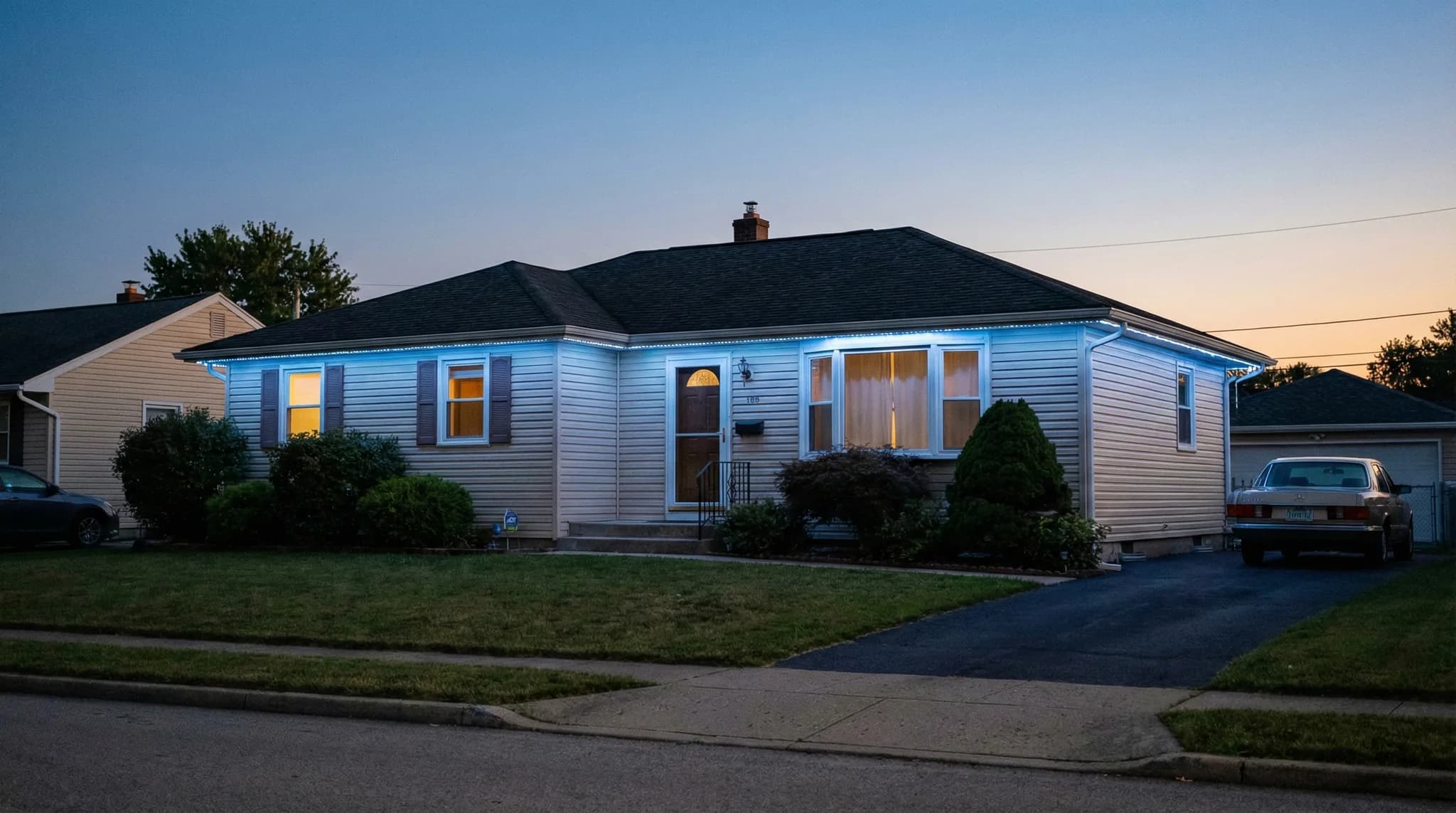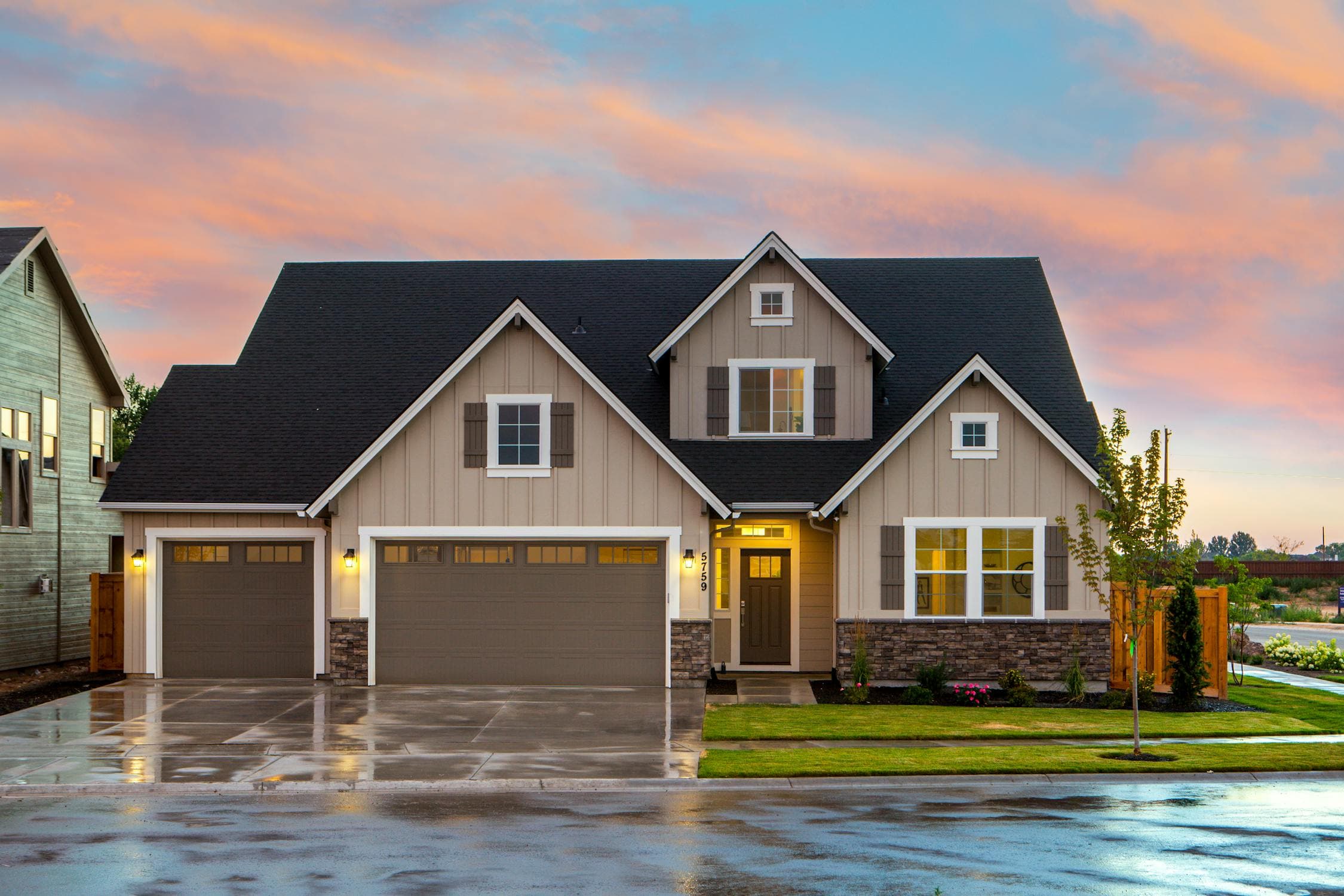
Permanent LED roofline lighting on a rental property creates a well-maintained, secure appearance that attracts quality tenants and reduces vacancy. Photo: Pexels
Permanent outdoor lights on rental properties reduce vacancy, lower tenant turnover, and cut long-term maintenance costs for Sacramento landlords. A one-time installation of $3,000 to $6,000 per property eliminates annual holiday lighting hassles, strengthens premises security, and gives every unit a professional, well-maintained exterior 365 nights a year.
Sacramento's rental market is competitive. With vacancy rates below 5% across stabilized properties (RentCafe, Q1 2026) and average rents near $1,995 per month, landlords need every edge to attract and retain quality tenants. Exterior presentation matters more than most property owners realize — and the hours between 5 PM and 10 PM are when most prospective tenants drive by or visit for showings.
This guide covers the business case for permanent outdoor lights on single-family rentals, small multifamily buildings, and multi-door portfolios in the Sacramento region. For a full pricing breakdown, see our permanent outdoor lights cost guide for Sacramento.
TL;DR: Permanent outdoor lights are a high-ROI upgrade for Sacramento rental properties. A typical single-family rental installation costs $3,000 to $6,000 with a lifetime warranty. Benefits include faster tenant placement, lower turnover, reduced premises liability risk, California habitability compliance for exterior lighting, and elimination of recurring seasonal lighting costs. The investment typically pays back within 2–3 years through reduced vacancy days and eliminated maintenance line items.
Why Landlords Should Install Permanent Outdoor Lights
The landlord case for permanent outdoor lights is different from the homeowner case. Homeowners think about curb appeal and personal enjoyment. Landlords think about NOI — net operating income. Every upgrade needs to either increase revenue, decrease expenses, or reduce risk. Permanent outdoor lights do all three.
Faster Tenant Placement
Most rental showings happen after work hours. A property with professional roofline lighting looks maintained, safe, and move-in ready at 7 PM when a prospective tenant pulls up. A dark exterior with no illumination beyond a porch light signals deferred maintenance — even if the interior is pristine.
Sacramento landlords managing properties in Natomas, Elk Grove, Rancho Cordova, and South Sacramento know that first impressions drive application volume. Every vacant day costs roughly $66 in lost rent at the Sacramento metro average of $1,995/month. Filling a unit even 5 days faster saves $330 per turnover.
Higher Tenant Retention
Tenant turnover is the most expensive line item in property management. Between cleaning, repairs, vacancy loss, and leasing costs, a single turnover runs $2,500 to $5,000 for a typical Sacramento single-family rental. Properties that feel safe, well-maintained, and visually appealing retain tenants longer.
Permanent outdoor lights contribute to retention by creating a property tenants feel proud to live in. Warm white roofline lighting that runs automatically every evening signals that the landlord invests in the property — which correlates directly with tenant satisfaction and lease renewal rates.
Reduced Premises Liability
California landlords carry a legal obligation to maintain safe, habitable premises. Under California Civil Code Section 1941, rental properties must have “adequate” lighting in common areas and exterior spaces. Tobener Ravenscroft LLP, a San Francisco tenant-rights firm, notes that California landlords have a duty to take “reasonable measures to secure premises to prevent foreseeable criminal acts.”
Permanent outdoor lights that run on automated schedules from dusk to a set shutoff time provide consistent, documented exterior illumination. That beats a single porch light controlled by a tenant who may or may not turn it on. For landlords managing multiple doors, automated lighting across the portfolio removes a liability variable from every property.
The Security Case: Lighting and Crime Deterrence for Rentals
Well-lit rental properties experience fewer security incidents. A randomized controlled study by the University of Chicago Crime Lab, conducted in New York City public housing, found that temporary streetlights led to a 36% reduction in nighttime outdoor index crime. A broader meta-analysis of 17 lighting studies found a 14% average decrease in crime across experimental areas compared to control areas.
For Sacramento landlords, the implication is direct: consistent exterior lighting reduces the probability of break-ins, package theft, and trespassing — all of which drive tenant complaints, insurance claims, and turnover. Properties in neighborhoods like Oak Park, Del Paso Heights, and South Sacramento benefit the most from visible, automated exterior illumination.
Permanent outdoor lights outperform motion-activated floodlights for crime deterrence because they provide consistent illumination rather than reactive bursts. A home that is lit every night from dusk to midnight sends a stronger deterrent signal than one that flashes a floodlight when movement is detected.
Pro Tip
If you manage multiple rental properties in Sacramento, ask your installer about portfolio pricing. Most permanent lighting companies offer volume discounts for 3+ properties installed in the same service window. A 5-property bundle can reduce the per-unit cost by 10–15%, accelerating your payback timeline.
Single-Family Rentals vs. Multifamily: Different Approaches
The installation approach and financial math differ depending on property type. Here is how permanent outdoor lights work across the rental property types common in Sacramento.
Single-Family Rental Homes
Single-family rentals are the simplest installation. The LED track mounts to the fascia along the front roofline, wrapping around the sides as far as the budget allows. A front-only installation on a typical 1,200–1,800 square foot Sacramento rental runs $2,500 to $4,000.
The landlord owns the system and the controller stays in the garage. Tenants access the app to change colors for holidays but cannot alter the automated schedule. This prevents renters from turning the system off and leaving the property dark — which protects both curb appeal and security.
Duplexes and Triplexes
Small multifamily properties use a single controller with multiple zones. Each unit's roofline section can run the same color or independent scenes. The cost per unit drops because the controller, wiring infrastructure, and installation mobilization are shared across units. A duplex typically runs $4,000 to $6,000 total — or $2,000 to $3,000 per door.
Small Apartment Buildings (4–12 Units)
For small apartment buildings common in Midtown, East Sacramento, and Land Park, permanent lights install along the building's full roofline and can extend to parking area overhangs, carports, and walkway fascia. The per-door cost drops further to $1,500 to $2,500. At this scale, the system also qualifies as a commercial permanent lighting installation with more robust controller hardware.
| Property Type | Total Cost | Cost per Door | Typical Payback |
|---|---|---|---|
| Single-family rental | $2,500–$4,000 | $2,500–$4,000 | 2–3 years |
| Duplex | $4,000–$6,000 | $2,000–$3,000 | 1.5–2.5 years |
| Triplex/fourplex | $5,000–$8,000 | $1,500–$2,500 | 1.5–2 years |
| Small apartment (4–12 units) | $8,000–$18,000 | $1,500–$2,500 | 1–2 years |
Costs reflect typical Sacramento installations including system, controller, professional labor, and lifetime warranty. Actual pricing varies by roofline footage and complexity.
California Landlord Lighting Requirements and Habitability Law
California Civil Code Section 1941.1 requires rental properties to maintain “adequate” electrical lighting with wiring and equipment in compliance with applicable law at the time of installation. This includes exterior common areas such as walkways, parking areas, and building entries.
The standard is not prescriptive about lumens or fixture types, but case law establishes that landlords who fail to provide reasonable exterior lighting face liability when criminal acts occur on poorly lit premises. iPropertyManagement's 2026 summary of California landlord responsibilities confirms that maintaining functional lighting in all habitable areas, including shared exterior spaces, is a baseline legal obligation.
Permanent outdoor lights satisfy this requirement automatically. The system runs on a programmed schedule, turns on at dusk, and does not depend on tenants to operate a switch. For landlords managing properties remotely or across multiple locations, this eliminates a compliance variable from the habitability checklist.
Sacramento-Specific Code Considerations
Sacramento County and the cities of Roseville, Rocklin, and Folsom each have municipal codes addressing exterior lighting on residential properties. Most require that exterior lighting be directed downward or shielded to prevent light trespass onto neighboring properties. Permanent LED systems meet this standard because the track mounts under the roof overhang, directing light downward across the facade rather than outward into neighboring lots.
For HOA-governed rentals in communities like Sun City Lincoln Hills or developments in Folsom and El Dorado Hills, review our Sacramento HOA rules guide for permanent outdoor lights before installation.
Maintenance and Management: The Landlord Advantage
The maintenance profile of permanent outdoor lights is what makes them particularly attractive for rental property owners. Unlike traditional fixtures that require bulb replacements, timer adjustments, and seasonal installation/removal, a permanent LED system is essentially install-and-forget.
What Maintenance Looks Like
The entire maintenance schedule consists of two tasks per year:
- Spring rinse (late April/May): A garden hose spray removes pollen and dust that accumulates during Sacramento's spring season. Takes 10–15 minutes. The tenant can handle this or it can be added to a landscaper's scope.
- Fall visual inspection (October): A quick ground-level check that all zones are illuminating correctly before the holiday season. No ladder required.
Compare that to traditional exterior lighting, which requires seasonal bulb replacements, timer battery changes, wiring repairs from UV degradation, and fixture replacement every 3–5 years. For a landlord managing 10, 20, or 50+ doors, the maintenance elimination alone justifies the investment.
Remote Monitoring and Control
Every permanent lighting system includes app control. As the property owner, you can check system status, adjust schedules, and verify that lights are running — all from your phone. This is valuable for landlords who manage properties across Sacramento, Roseville, and Rocklin without visiting each property daily.
If a zone goes dark, the app sends an alert. Most issues resolve with a remote controller restart. Anything requiring physical access is covered under the lifetime warranty — the installer handles it at no cost.
Manage Multiple Rental Properties in Sacramento?
EXT Lighting offers portfolio pricing for landlords with 3+ properties. One consultation covers your entire portfolio with per-property quotes and volume discounts.
Request Portfolio PricingWarranty and Ownership: Who Owns the System?
The landlord owns the permanent lighting system. It is a fixture attached to the property, similar to a ceiling fan, built-in shelving, or a garage door opener. When a tenant moves out, the system stays.
This matters for two reasons:
- Warranty continuity: The lifetime warranty stays with the property owner regardless of tenant turnover. You never need to re-register or transfer the warranty between tenants.
- Capital improvement treatment: Permanent outdoor lights qualify as a capital improvement for tax purposes. Consult your CPA, but the system is generally depreciable over 15 years (land improvements) or 27.5 years (residential rental property improvements) under IRS guidelines.
For details on what the warranty covers and common exclusions, see our full permanent outdoor lights warranty guide.
How to Handle Tenant Access and App Permissions
One common question from landlords: should tenants have access to the lighting app? The answer is yes, with restrictions.
Most permanent lighting systems support multiple user roles. The property owner maintains admin access with full control over schedules, brightness defaults, and zone management. Tenants receive limited access that allows them to switch between pre-set color scenes — warm white for everyday, team colors for game nights, holiday themes for December — without overriding the automated schedule.
Here is the recommended permission structure for rental properties:
- Owner/manager (admin): Full schedule control, brightness defaults, zone management, system alerts, and the ability to lock settings remotely.
- Tenant (limited user): Color scene selection from pre-approved presets, temporary brightness override (resets at next schedule trigger), and holiday pattern access.
- Property manager (delegated admin): Same as owner access, useful for landlords who delegate to a management company.
When a tenant moves out, revoke their app access and reassign to the new tenant. The system itself stays in place with no physical changes required. For a deeper look at smart control features, including voice assistant integration, see our dedicated guide.
Resale Value: How Permanent Lights Affect Rental Property Sales
Landlords sell rental properties too. When that day comes, permanent outdoor lights add value on both the aesthetic and functional sides of the listing.
The National Association of Realtors and NALP Outdoor Features Report gives landscape lighting a perfect 10 out of 10 Joy Score with 59% cost recovery at resale. Permanent LED roofline systems often outperform that benchmark because they deliver more visual coverage than traditional landscape spotlights at a similar or lower price point. For a full analysis, see our permanent outdoor lights and home value guide.
When selling a rental property, the permanent lighting system becomes a selling feature in the listing. Investors evaluating the property see reduced maintenance overhead, built-in security lighting, and a tenant-attractive amenity — all of which support a higher cap rate justification.
Pro Tip
Include permanent outdoor lights in your rental listing description. Phrases like “permanent LED roofline lighting with smart app control” signal a tech-forward, well-maintained property. Tenants searching for rentals in Sacramento increasingly filter for smart home features — and permanent lights check that box.
Installation Planning for Rental Property Owners
Installing permanent lights on an occupied rental requires coordination with the tenant. Here is the typical timeline and what landlords should plan for.
- Consultation (30–60 minutes): The installer visits the property, measures roofline footage, identifies the controller location (usually the garage), and provides a quote. The tenant does not need to be present, but a heads-up is courteous.
- Scheduling (1–3 weeks out): Installation is scheduled for a date that works for property access. The tenant needs to provide garage access for the controller installation.
- Installation day (4–8 hours): The crew works entirely on the exterior. The only interior access needed is the garage for the controller and a 120V outlet. Tenants can remain in the home during installation.
- Walkthrough and app setup (15–20 minutes): The installer demonstrates the system, sets the default schedule, and configures owner and tenant app access.
For details on the full permanent light installation process, including what to expect at each stage, see our installation guide.
Best Time to Install on Rental Properties
The best time to install is during a vacancy between tenants. This eliminates coordination overhead and lets the system be fully operational before the new tenant moves in. If the property is occupied, Sacramento's mild fall and spring weather (September–November, March–May) offers the most comfortable installation conditions.
Frequently Asked Questions
Are permanent outdoor lights a good investment for rental properties?
Yes. Permanent outdoor lights reduce vacancy time, lower tenant turnover, eliminate seasonal lighting maintenance, strengthen premises security, and help meet California habitability requirements for exterior lighting. The typical payback period on a Sacramento single-family rental is 2 to 3 years, with ongoing annual savings of $1,000 to $1,700 per unit after that.
Who pays for permanent outdoor lights on a rental — landlord or tenant?
The landlord pays for installation because permanent lights are a property fixture, similar to a garage door or built-in appliance. The system stays with the property regardless of tenant changes. Electricity costs are minimal ($4 to $8 per month at SMUD rates) and are typically included in the tenant's electric bill since the system runs from a standard garage outlet.
Can tenants control the permanent outdoor lights?
Yes, with limited permissions. The property owner maintains admin access to schedules and default settings. Tenants receive app access to switch between pre-approved color scenes (warm white, holiday themes, team colors) without overriding the automated schedule. When a tenant moves out, their app access is revoked and reassigned to the new tenant.
Do permanent outdoor lights work on Sacramento stucco rental homes?
Yes. The LED track mounts to the fascia board, not the stucco. No drilling into stucco walls is required. The fascia-mount approach works on all Sacramento home styles including stucco, wood siding, and fiber cement. For more details, see our stucco and tile roof installation guide.
Are landlords legally required to provide exterior lighting in California?
California Civil Code Section 1941.1 requires rental properties to maintain “adequate” lighting including in exterior common areas. Landlords also carry a duty under premises liability law to take reasonable measures to prevent foreseeable criminal acts, which courts have interpreted to include adequate exterior illumination. Permanent outdoor lights satisfy both requirements automatically with their programmed dusk-to-shutoff schedule.
How much do permanent outdoor lights cost for a rental property in Sacramento?
A single-family rental typically costs $2,500 to $4,000 for a front-facing roofline installation with app control and lifetime warranty. Duplexes run $4,000 to $6,000 total ($2,000 to $3,000 per door). Small apartment buildings of 4 to 12 units range from $8,000 to $18,000 total ($1,500 to $2,500 per door). Volume discounts are available for landlords installing on 3 or more properties.
Ready to Upgrade Your Rental Portfolio's Exterior Lighting?
EXT Lighting works with Sacramento landlords and property managers to install permanent outdoor LED systems across single-family rentals, duplexes, and small apartment buildings. Portfolio pricing available for 3+ properties. Every installation includes a lifetime warranty on parts and labor.
Get Your Free Portfolio Quote