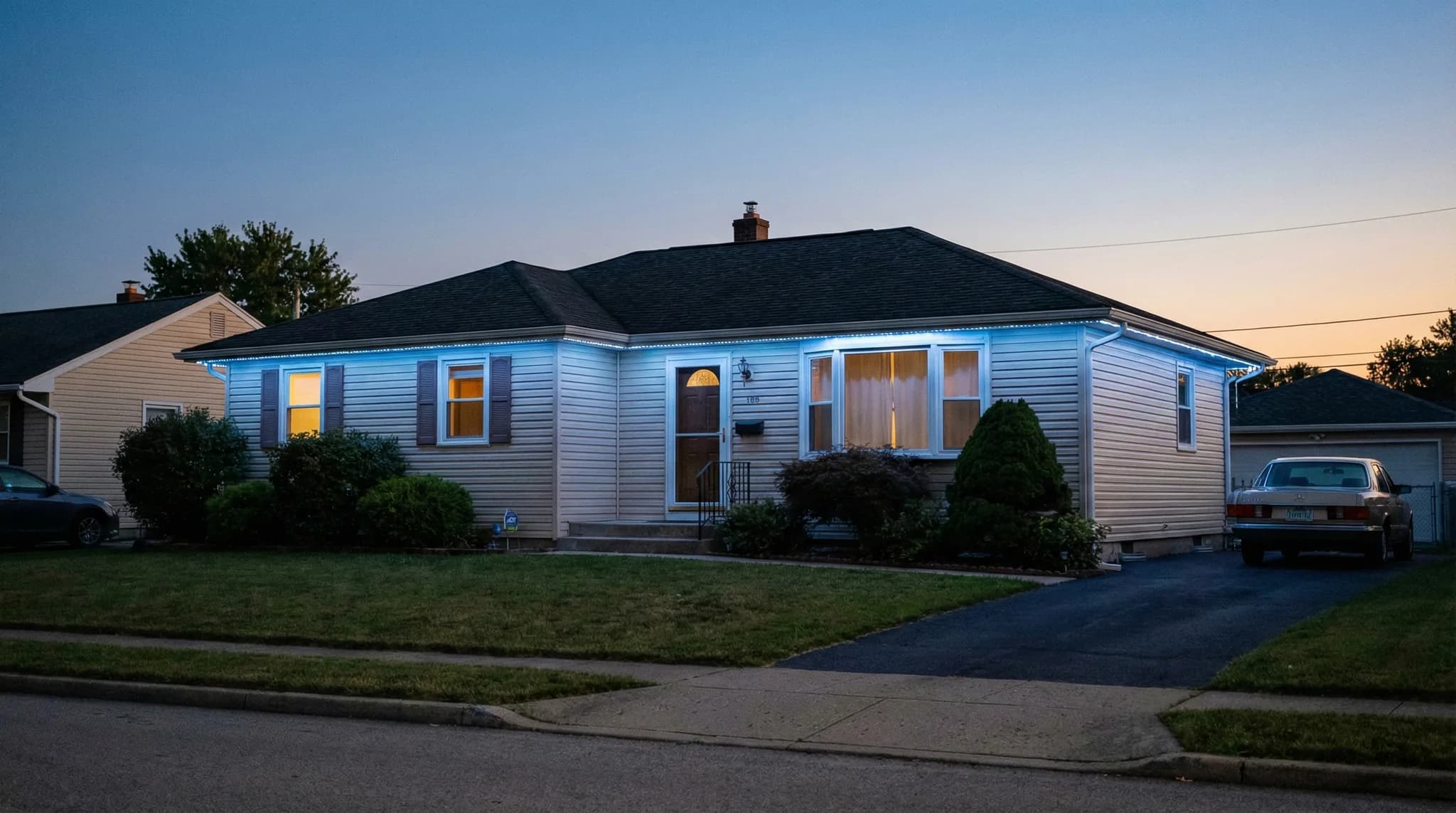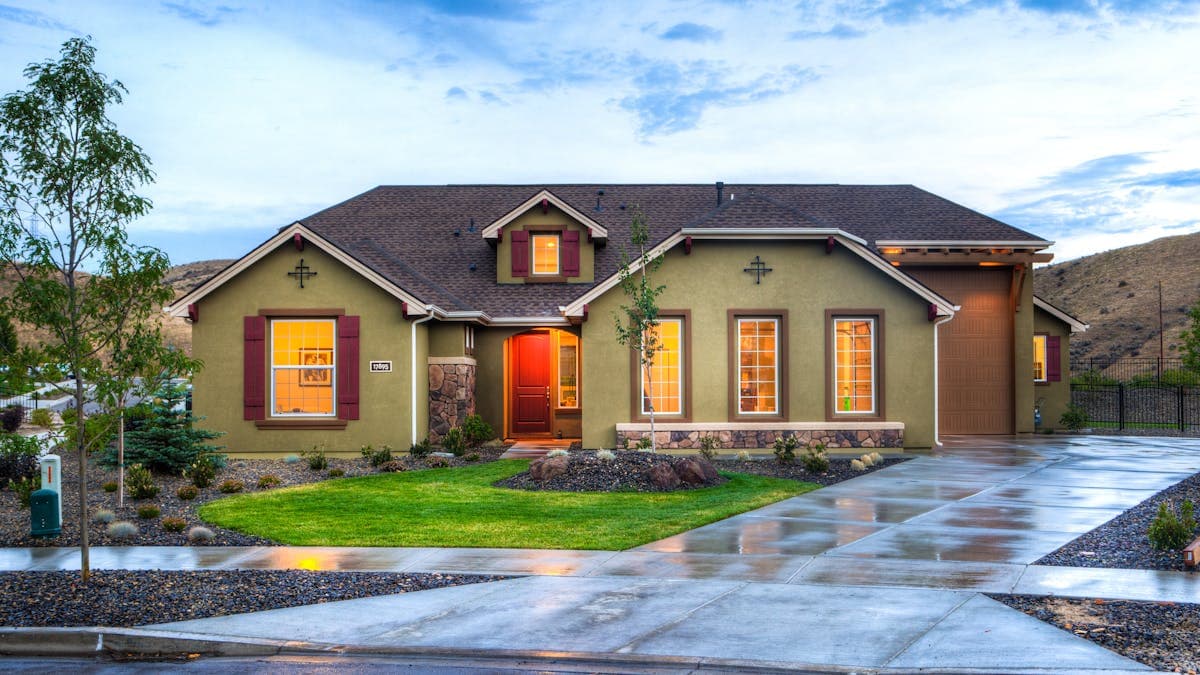
A detached ADU with permanent LED roofline lighting keeps the backyard unit safely illuminated while staying visually distinct from the main home. Photo: Pexels
Permanent outdoor lights for an ADU in Sacramento solve three problems at once: Title 24 compliance, nighttime safety around a detached structure, and visual separation between the granny flat and the main house. A single-story 400 to 1,200 square foot backyard unit in Sacramento, Roseville, or Rocklin typically needs $1,800 to $3,500 in permanent LED roofline lighting, and when bundled with a main-house install, the per-unit cost drops 15 to 25 percent.
California is in the middle of a historic backyard home boom. The California Department of Housing and Community Development (HCD) reported more than 28,000 ADU permits issued statewide in 2023 — roughly a tenfold increase over 2016 — and the Sacramento Area Council of Governments (SACOG) has consistently ranked the six-county Sacramento region among the top five ADU-producing metros in the state. With SB 9 lot splits and SB 1211 allowing up to eight detached ADUs on multifamily lots, a lot of Sacramento homeowners are looking at the same question: how do you light a second home in the backyard without wrecking the yard or drawing a code violation?
This guide covers coverage planning for common ADU footprints, Title 24 outdoor lighting requirements, app zoning so the ADU stays independent from the main house, and the 2026 rebate and financing stack. For context on regional pricing differences, see our Roseville and Rocklin installation guide and our Sacramento cost breakdown.
TL;DR: California's ADU boom means thousands of Sacramento, Roseville, and Rocklin backyards now hold a second dwelling. Permanent outdoor LED lights are the cleanest way to illuminate a detached ADU or granny flat. Expect $1,800 to $3,500 per unit, a dedicated app zone separate from the main house, and automatic Title 24 compliance. The system qualifies for 2026 SMUD efficiency programs and common 0% financing. Plan coverage by roofline footage, not square footage, and use warm white (2700K to 3000K) as the default to minimize spillover to neighbors.
California's ADU Boom and What It Means for Sacramento Homeowners
ADUs went from a niche planning topic to a statewide housing strategy in under a decade. A sequence of California laws — AB 68, AB 881, SB 13, and most recently SB 9 and SB 1211 — stripped away most of the local restrictions that used to block backyard units. HCD's most recent annual report showed ADUs made up roughly 1 in 5 new housing units permitted in California.
Sacramento Region Leads the ADU Wave
SACOG housing data shows the six-county Sacramento region (Sacramento, Placer, El Dorado, Yolo, Sutter, Yuba) permitted thousands of ADUs in the last full reporting year, with the City of Sacramento, Citrus Heights, Roseville, and Rocklin among the most active jurisdictions. Elk Grove and Folsom are catching up fast as lot sizes allow for larger detached units.
SB 9 and SB 1211 Change the Math
- SB 9 (2021): allows ministerial lot splits and duplex conversions on most single-family lots statewide. A single parcel can now legally hold two units plus one ADU per unit.
- SB 1211 (2024): raises the detached ADU cap on multifamily lots from two to eight units, with streamlined approval.
- AB 1033 (2023): lets homeowners sell an ADU separately as a condo in cities that opt in.
What all of this means for lighting: a Sacramento property might now have 2, 3, or even 8 separate living units where there used to be one house. Every one of those units needs its own safe path at night, a legible address after dark, and lighting that complies with California's Title 24 energy code.
California Title 24 Outdoor Lighting Rules for ADUs
Title 24, Part 6 is California's Building Energy Efficiency Standards, enforced by the California Energy Commission (CEC). Section 150.0(k) governs residential outdoor lighting and applies to every ADU permitted in 2019 or later. The rules are strict but permanent LED systems pass all of them automatically.
What Title 24 Requires for Residential Outdoor Lighting
- High-efficacy light sources — at least 45 lumens per watt for fixtures over 5 watts. Every LED used in permanent roofline systems exceeds 90 lumens per watt, so this is a pass by default.
- Automatic controls — fixtures must shut off when daylight is available. A permanent system's photocell or sunset-based app schedule satisfies this automatically.
- Motion-sensor or timer override on certain fixtures. Modern permanent systems include programmable schedules and can be paired with motion zones for service-side lighting.
- Joint Appendix JA8 compliance for color quality and flicker. Commercial-grade permanent LED systems from Jellyfish, Gemstone, Oelo, and Trimlight meet JA8.
The practical takeaway: if your contractor pulls an electrical permit for the ADU, the inspector will confirm that the exterior lighting is Title 24 compliant before signing off. A permanent LED roofline system is the most straightforward way to check that box without specifying individual wall-pack fixtures, porch lights, and photocells one by one.
Pro Tip
If your ADU build permit was pulled under the 2022 or 2025 Title 24 update, have your permanent lighting installer give your inspector a one-page JA8 compliance sheet before the final. It shortens the electrical sign-off and avoids a return visit over porch-light lumens-per-watt math.
Coverage Planning for a 400 to 1,200 Square Foot ADU
Permanent lighting is priced by linear feet of roofline, not square footage. That matters because an ADU with a simple rectangular footprint needs far less track than one with a hip roof, gables, or dormers.
Typical Linear Footage by ADU Size
Sacramento ADU plans fall into a few common footprints. The table below shows typical roofline length and expected installation pricing for each.
| ADU Size | Typical Footprint | Roofline Feet | Installed Cost |
|---|---|---|---|
| Studio / Junior ADU | 400–500 sq ft | 80–110 ft | $1,800–$2,400 |
| 1-bedroom detached ADU | 600–800 sq ft | 110–140 ft | $2,200–$2,900 |
| 2-bedroom granny flat | 900–1,200 sq ft | 140–180 ft | $2,800–$3,500 |
| Garage conversion ADU | 400–600 sq ft | 70–100 ft | $1,600–$2,200 |
| Two-story detached ADU | 1,000–1,200 sq ft | 120–160 ft | $3,200–$4,200 |
Sacramento-area installed pricing, including track, controller share, professional labor, and lifetime warranty. Two-story units carry a premium for extended ladder work. For home-by-home pricing, see our pricing by home size guide.
Where to Prioritize Lighting on an ADU
If the budget is tight, prioritize in this order:
- Entry-side fascia: the path from the main-house walkway to the ADU door is the single highest-value run. This is what tenants, short-term renters, and family members use every night.
- Street-visible fascia: if any part of the ADU is visible from the street, light it. It raises curb appeal and satisfies address-legibility expectations.
- Service and parking sides: illuminate any side with trash bins, a dedicated parking pad, or a tandem driveway.
- Backyard-facing fascia: last priority unless the ADU has its own patio or entertaining area.
Keeping the ADU Visually Separate from the Main House
A common mistake on bundled installs is running the same schedule and same colors on both structures. That makes the property read like one big house to anyone walking up — which is exactly what you do not want when a tenant or short-term guest needs to find the ADU door in the dark.
Use App Zones to Separate Control
Every modern permanent lighting app (Jellyfish, Gemstone, Oelo, EverLights, Trimlight) supports independent zones. A Sacramento ADU setup typically uses three:
- Main House Front: admin-only, runs the holiday schedule the main-house owner picks.
- ADU: separate zone, separate schedule, assigned to the tenant or family member living in the unit.
- Shared / Pathway: motion or always-on warm white on the walk between the two structures.
Read more about building this kind of automation across a property in our home automation guide and our smart app control walkthrough.
Use Color and Pattern to Distinguish the Units
A simple trick: set the main house default to a warmer 2700K white and the ADU default to a slightly cooler 3000K white. Both still read as “warm white” to a neighbor, but on approach the ADU becomes visibly distinct. Alternatively, pick a subtle color accent (a single amber pixel at each ADU door corner) to create a permanent wayfinding cue.
One East Sacramento homeowner who converted her detached garage into a 650-square-foot ADU for her mother uses this exact setup. The main house stays on a warm-white schedule. The ADU runs the same warm white but with a soft amber pixel at each fascia corner marking the door. Her mother finds the unit at night without reading glasses, and the Airbnb-style weekend stays her daughter hosts never knock on the wrong door.
Safety Considerations Unique to Detached Backyard Units
A detached ADU has a different safety profile than a main house. The path from driveway or sidewalk to the unit is usually longer, it crosses a yard, and it is often obstructed by fences, planters, or the main house itself.
Address Legibility
Sacramento Fire Department guidance and California Fire Code 505.1 both require addresses to be “plainly visible” from the street. For an ADU with a separate unit number (A, B, or 1/2), illuminated address characters are strongly recommended. A permanent LED roofline on the ADU makes the unit visible to first responders at night without adding a separate address light.
Pathway Lighting
The walk between the main house and the ADU should never go dark. Combine the ADU roofline with low-voltage path lights along the walk or motion-activated wall packs near the fence gate. For a deeper comparison of path-light options, see landscape lighting vs. permanent outdoor lights.
Premises Liability for Rented ADUs
If you rent your ADU on a long-term lease or as a short-term rental, California Civil Code Section 1941.1 and premises liability case law expect you to provide “adequate” exterior lighting. Permanent LED roofline lighting with a documented dusk-to-bedtime schedule creates a clean record. We cover this in more depth in our rental property lighting guide.
Ambiance and Outdoor Living Around an ADU
The backyard is usually the single biggest casualty of an ADU build. The yard loses 400 to 1,200 square feet of open space and gains a wall where there used to be a hedge. Permanent LED lighting is one of the cheapest ways to put the backyard back to work.
Treat the ADU Wall as a Patio Backdrop
The exterior wall of a detached ADU becomes a natural edge for an outdoor living space. A pergola off that wall with permanent roofline lights along the top creates a lit patio that shares the ADU's electrical run. See our patio and pergola lighting guide for pattern ideas.
Entertaining With a Tenant or Family Member Next Door
Coordinate schedules. The main house and ADU share a property but have separate lives. Set a default “quiet hours” dim step at 10 PM for the ADU zone so the main house's backyard party lighting does not spill into the granny flat's bedroom window — and vice versa.
Granny Flat Exterior Lighting in Roseville and Rocklin
Roseville and Rocklin have some of the most active ADU pipelines in the Sacramento region, and both cities have additional exterior lighting rules worth knowing before you design a system.
Roseville Exterior Lighting Rules
Roseville Municipal Code Section 17.20.080 requires exterior lighting to be “shielded and directed downward” and limits light trespass onto neighboring residential properties to 0.5 foot-candles at the property line. Permanent LED roofline systems naturally comply because the fixtures aim straight down along the fascia.
Rocklin Exterior Lighting Rules
Rocklin Municipal Code Section 17.84 governs lighting standards for residential properties. Rocklin is slightly stricter on glare — the code language calls for “no direct view of the light source from adjacent properties.” Permanent systems with recessed LED channels and warm white defaults meet this standard.
HOA Considerations
Many newer Roseville and Rocklin ADUs sit inside master-planned communities with active HOAs. Review your HOA CC&Rs before installation and stick to warm white defaults year-round outside of major holidays. See our HOA rules guide for the standard approval checklist.
A Rocklin homeowner who built a 1,100 square foot two-bedroom granny flat for her parents was initially worried the HOA would reject any exterior lighting on the new unit. She submitted an approval request with the permanent lighting spec sheet, including the 2700K warm white default, downward-aimed fixtures, and a nightly 10 PM dim schedule. Approval came back the same week. The ADU roofline is now the brightest Title 24 compliant lighting in her cul-de-sac, and the neighbors have stopped complaining about the trash bins her parents forget on Sundays.
Rebates and Financing for Sacramento ADU Lighting in 2026
The 2026 incentive landscape for ADU construction is the richest it has ever been. Lighting is often a small slice of the overall package, but a few programs still apply directly.
Programs Worth Checking
- CalADU.org Grant Program: the Calhome ADU Grant program has reopened funding cycles for income-qualified homeowners. Lighting is included as a permitted soft cost when part of the full ADU scope.
- SMUD Residential Efficiency: SMUD periodically runs rebates for high-efficacy outdoor lighting retrofits on existing homes, including ADUs.
- California Energy Commission BUILD Program:incentives for all-electric new construction, which often applies to new detached ADUs in the Sacramento region.
- Installer Financing: most permanent lighting contractors offer 12 to 24 month 0% plans through GreenSky, Synchrony, or Service Finance. Longer-term financing (60 to 120 months) is available at standard rates.
If you are rolling the lighting into your ADU construction loan or HELOC, your installer will issue a pre-permit cost breakdown your lender can add to the scope. For pure-lighting financing outside of construction, see our Sacramento financing guide.
When to Install: During ADU Construction vs. After
The ideal time to install permanent outdoor lights on a new ADU is immediately after the exterior trim is finished and before the final electrical inspection. That sequence minimizes ladder time, avoids damage to finished landscaping, and lets the inspector confirm Title 24 compliance on a single visit.
During Construction (Recommended)
Schedule the install after fascia paint has cured and before final landscaping. The permanent track mounts cleanly, the controller ties into the new garage or closet panel the ADU already has, and the inspector signs off on lighting and electrical together. Labor is 20 to 30 percent less than a retrofit because there is no yard or furniture to work around.
After Construction (Retrofit)
A retrofit is still straightforward. The installer pulls a permit where required, mounts the track to the existing fascia, and runs the controller from the ADU's garage or mechanical closet. Expect one day of install for a standard detached ADU. See our step-by-step installation guide for the full walkthrough.
Will Sacramento's Climate Damage the ADU's Lights?
Sacramento summers are hot — average July highs run 93°F with stretches into triple digits. Commercial-grade permanent LED systems are rated for ambient temperatures up to 140°F with IP66 or IP67 weatherproofing, which handles Sacramento's heat without derating.
ADUs built with light-colored roof shingles or cool-roof membranes stay cooler than older tar-and-gravel main-house rooflines, which actually helps extend LED life. For more on heat performance, see permanent outdoor lights in Sacramento's extreme heat and how long permanent outdoor lights last.
Building or finishing an ADU in Sacramento, Roseville, or Rocklin?
Get a coordinated quote covering the main house and the ADU as a bundled install. Typical savings: 15 to 25 percent on the ADU run.
Request a Bundled ADU QuotePre-Fab and Modular ADUs: Install Considerations
Pre-fab and modular ADUs from Abodu, Cover, Villa, Samara, Autonomous, and a growing list of California-specific vendors come with factory-finished exteriors that can simplify or complicate a permanent lighting install depending on the product.
- Traditional fascia: units with a standard fascia board (most Villa and Abodu models) install exactly like a stick-built ADU.
- Flat roof parapets: modern flat-roof models use a soffit-mount track or a channel mount along the top edge of the wall.
- Metal siding: some units (Cover, Samara) use metal exterior panels. The track mounts to structural members behind the panel, not to the panel itself.
Ask your installer to review the manufacturer's spec sheet before the quote so the mount plan is locked in before install day.
Frequently Asked Questions
Do I need permanent outdoor lights on my Sacramento ADU or granny flat?
Permanent lights are not code-mandated, but California Title 24 (Part 6, Section 150.0(k)) does require that all outdoor lighting on residential properties — including ADUs — use high-efficacy sources with automatic controls. A permanent LED roofline system satisfies that requirement with a single purchase, eliminates the need for a separate timer or photocell at the ADU, and gives tenants or family members clean dusk-to-dawn lighting with app control.
How much does it cost to install permanent outdoor lights on a detached ADU in Sacramento?
A typical 400 to 1,200 square foot ADU with a single-story roofline runs $1,800 to $3,500 installed. That covers the front and one or two side rooflines with LED track, a dedicated app zone, and a lifetime warranty. Bundled with a main-house install, the ADU pricing typically drops 15 to 25 percent because the controller and mobilization are shared.
Can the ADU have its own lighting schedule separate from the main house?
Yes. Every modern permanent lighting system (Jellyfish, Gemstone, Oelo, EverLights, Trimlight) supports independent zones. The ADU becomes its own zone with its own schedule, colors, and app permissions. That means a tenant in the granny flat can change scenes over their unit without affecting the main home, and the landlord can keep an always-on warm-white default for safety.
Are there rebates or financing for ADU exterior lighting in Sacramento?
SMUD's residential energy efficiency programs and the California Energy Commission's BUILD and TECH programs periodically offer rebates for high-efficacy outdoor lighting and electrification retrofits. Most permanent lighting installers also offer 0% financing for 12 to 24 months and longer-term financing through GreenSky or Synchrony. Check CalADU.org for the current ADU-specific incentive stack.
Does SB 9 or SB 1211 change the lighting rules for my ADU?
SB 9 (2021) allows lot splits and duplex conversion on single-family lots, and SB 1211 (2024) lets homeowners build up to eight detached ADUs on multifamily lots. Neither law changes the outdoor lighting code — Title 24 still governs. What does change is scale: an SB 1211 property with multiple detached units needs zoned lighting, shielded fixtures to limit spillover between units, and a controller that can manage separate schedules per ADU.
How do I avoid light spillover from my granny flat to neighbors in Roseville or Rocklin?
Aim LEDs downward, use warm-white (2700K to 3000K) for defaults, and build in a dimming step at 10 PM. Roseville Municipal Code Section 17.20.080 and Rocklin Municipal Code Section 17.84.040 both limit light trespass onto neighboring properties. A properly installed permanent LED track points downward along the fascia, which keeps output on your roofline, soffit, and ground — not over the fence.
Can I use permanent outdoor lights on a pre-fab or modular ADU?
Yes. Pre-fab and modular ADUs from companies like Abodu, Cover, and Villa typically have a fascia board or eave suitable for LED track mounting. The installer reviews the product spec sheet before the appointment to confirm mount points. If the ADU has no traditional fascia (flat-roof modern design), channel mounts or soffit tracks are used instead.
Ready to Light Your ADU the Right Way?
EXT Lighting works with Sacramento, Roseville, and Rocklin homeowners and ADU builders to install permanent outdoor LED systems on detached backyard units. Coordinated pricing with main house installs, Title 24 compliance documentation, and lifetime warranty on parts and labor.
Get a Free ADU Lighting Quote