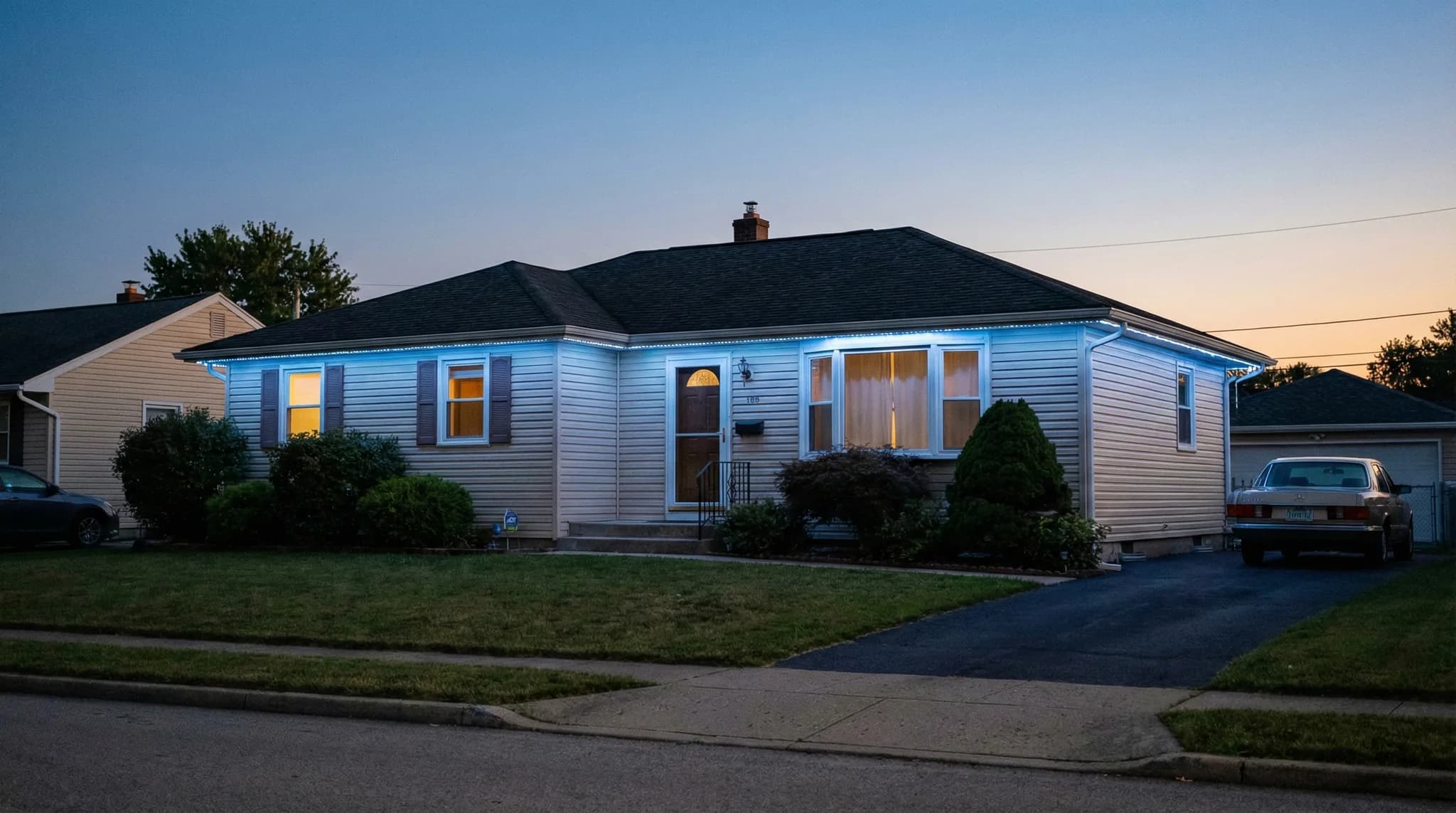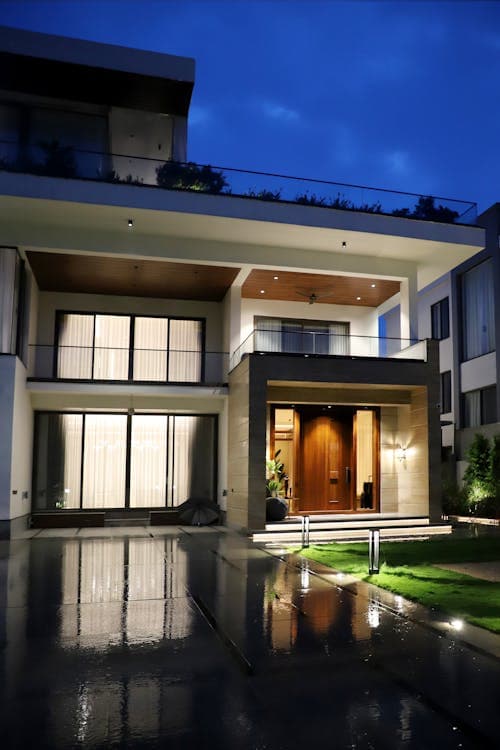
Permanent outdoor lights mount to the fascia board – not the stucco or tile roof itself – making them compatible with virtually every Sacramento home style.
Installing permanent outdoor lights on a stucco house with a tile roof is not only possible – it is one of the most common installation scenarios in the Sacramento area. Stucco is the dominant exterior wall material in California, used on 64% of new homes in the Pacific division according to the U.S. Census Bureau's 2024 Survey of Construction. In Sacramento, Roseville, and Rocklin, the combination of stucco walls and clay or concrete tile roofs defines the majority of the housing stock.
The key fact that puts most homeowners at ease: permanent outdoor lights mount to your fascia board, not your stucco walls or tile roof. The fascia – the flat board running along the lower edge of the roofline – is the same mounting surface used for gutters. Professional installers never drill into stucco or walk on tile during a standard installation.
This guide covers exactly how permanent lights work on Sacramento's most common home types, what to expect during installation, and the specific considerations for stucco and tile roof homes. For a general overview of the installation process, see our step-by-step installation guide.
TL;DR: Permanent outdoor lights attach to the fascia board with mechanical fasteners (screws), not to stucco or tile. No drilling into stucco, no walking on tile, no adhesive that fails in Sacramento's heat. The aluminum track channel is color-matched to your trim and sits flush against the fascia, making it nearly invisible during the day. Sacramento homes with stucco walls and tile roofs are ideal candidates for permanent lighting because the fascia is typically wood or composite – the perfect mounting surface.
How Permanent Lights Mount on a Stucco House
The single most important thing to understand: permanent outdoor lights do not attach to your stucco. They mount to the fascia board – the flat trim board that runs horizontally along the lower edge of your roof.
Here is how the mounting works on a typical Sacramento stucco home:
- The aluminum track channel is custom-cut to the exact length of each fascia section. Channels come in 100+ colors to match your existing trim, paint, or stucco tone.
- Mechanical fasteners (screws) secure the channel directly to the fascia board. The screws are spaced every 12–18 inches for a secure hold.
- LED modules snap into the channel at the specified spacing (6″, 9″, or 12″ depending on the system). Wiring runs inside the channel, completely concealed from view.
- The power cable routes from the channel through an existing soffit vent or a small drilled entry point in the soffit (not the stucco), connecting to a controller mounted in the garage or attic.
The result: a clean, flush-mounted lighting track that follows your roofline. During the day, it blends with your trim. At night, it transforms your entire home's exterior.
Where Permanent Lights Actually Mount: Fascia, Not Stucco
Tile Roof Considerations for Permanent Light Installation
Sacramento homeowners with clay or concrete tile roofs often worry that permanent light installation will require walking on their tiles. It does not. The installation happens entirely at the fascia level – below the tile line.
Here is why tile roofs are actually compatible with permanent lights:
- No roof access needed: Installers work from ladders positioned against the fascia or from a lift for two-story homes. They never need to step on tile.
- No tile removal: The track channel mounts to the face of the fascia, below the drip edge where tiles overhang. No tiles need to be moved, lifted, or disturbed.
- No roof penetration: Unlike satellite dishes or solar mounts that require roof penetrations, permanent lights attach exclusively to the vertical face of the fascia board.
- Tile overhang is an advantage: The slight overhang of clay or concrete tile actually helps protect the LED track from direct rain and UV exposure, extending the system's lifespan.
If your tile roof has been recently replaced or repaired, permanent light installation will not void your roofing warranty. The two systems occupy completely different parts of the roofline structure. That said, always confirm with your roofer if you have an active warranty.
Pro Tip
When getting quotes for permanent lights on a tile roof home, ask the installer to confirm their method for accessing the fascia on two-story sections. Professional installers use extension ladders or articulating lifts – never walk on tile. If an installer says they need to walk on your roof, that is a red flag. Our installer checklist covers all 7 verification points.
Sacramento's Most Common Home Styles and Installation Approach
The Sacramento metro encompasses a wide range of home styles, but the vast majority share one trait: stucco exterior walls. Here is how permanent lights work on each common style:
Mediterranean and Spanish Revival Homes
Found throughout Land Park, East Sacramento, Curtis Park, and older Roseville neighborhoods, these homes feature stucco walls, arched windows, clay tile roofs, and decorative fascia. Permanent lights follow the roofline beautifully on these homes, and the track channel can be color-matched to ornamental trim. The warm tones of Mediterranean architecture pair especially well with warm white LED lighting.
Ranch-Style Homes
Single-story ranch homes dominate many Sacramento neighborhoods, including parts of Carmichael, Citrus Heights, Orangevale, and North Natomas. These are the fastest and most straightforward installations: one story means shorter ladder work, and the long, continuous rooflines provide dramatic lighting coverage. Typical ranch homes need 100–150 linear feet of track.
Two-Story Stucco Homes
The dominant style in newer Sacramento-area communities like West Roseville, Whitney Ranch, Granite Bay, and El Dorado Hills. Two-story homes require more linear footage (150–250 feet) and sometimes need articulating lifts for safe fascia access on upper stories. The installation takes longer – typically a full day – but the result is striking: lit rooflines at both levels create depth and dimension.
Craftsman and Bungalow Homes
Found in Midtown Sacramento, Curtis Park, and Boulevard Park, these homes often have wood siding rather than stucco. Permanent lights work equally well on wood fascia, and the lower rooflines typical of Craftsman homes make installation faster. The challenge is sometimes narrower fascia boards, which professional installers accommodate with compact track profiles.
Permanent Light Compatibility by Sacramento Home Style
Do Permanent Lights Damage Stucco?
No. This is the most common concern we hear from Sacramento homeowners, and the answer is straightforward: permanent lights never touch your stucco.
The potential damage scenarios that homeowners worry about – and why none of them apply:
- “Will screws crack my stucco?” – No screws go into stucco. All fasteners go into the fascia board, which is wood or composite.
- “Will adhesive discolor my stucco?” – Professional systems do not use adhesive. Mechanical fastening is the standard for any installation rated for Sacramento's climate. (DIY kits like Govee do use adhesive – and it can damage stucco when removed. See our DIY vs. professional comparison.)
- “Will the track leave marks on my trim?” – If you ever remove the system, you will have small screw holes in the fascia (similar to gutter mounting holes). These are easily filled and painted. The stucco walls remain completely untouched.
- “Will installation vibration crack stucco?” – Fascia-mounted screws create zero vibration in the stucco. The fascia and stucco are separate structural elements.
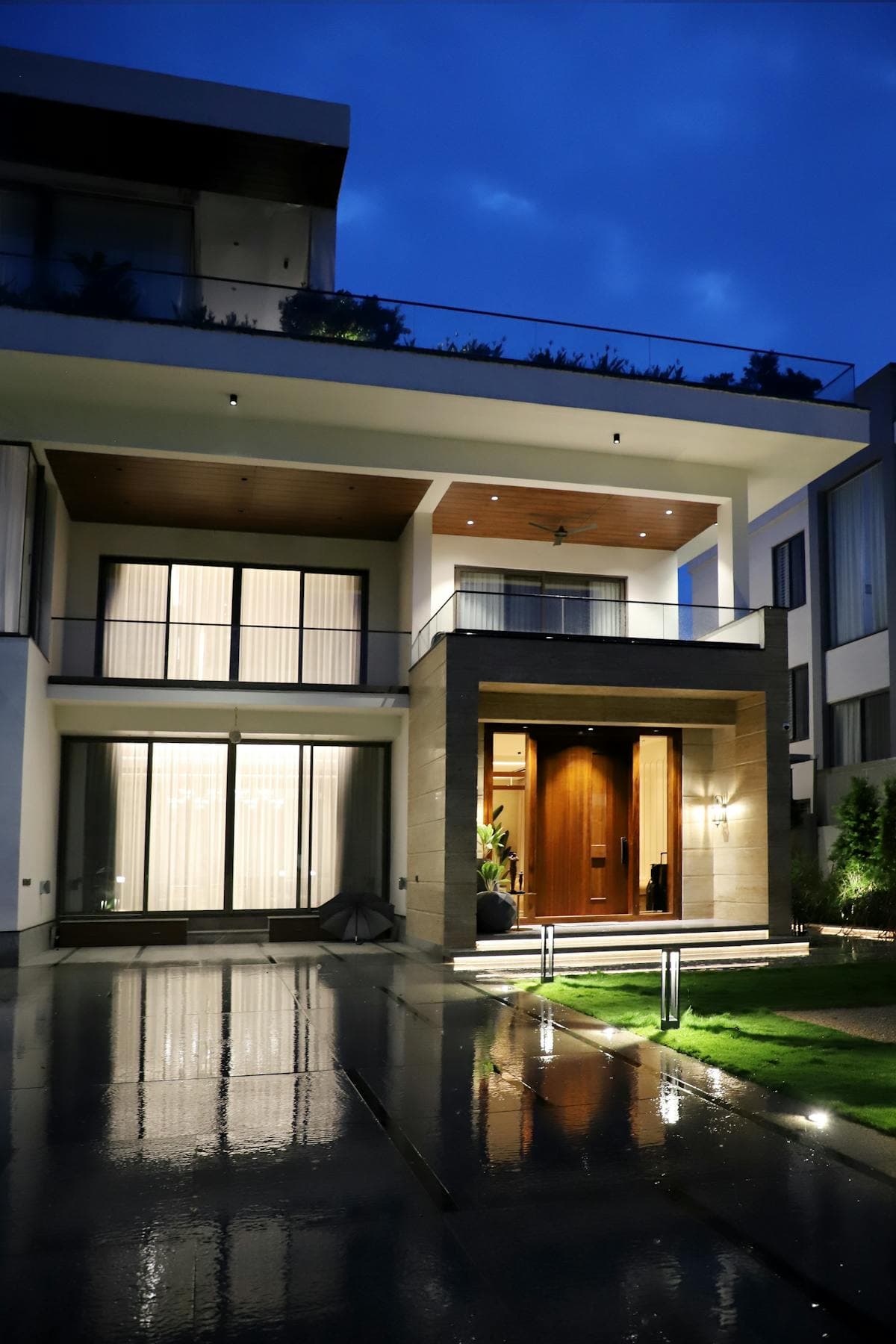
The aluminum track mounts flush to the fascia and is color-matched to your trim – invisible during the day, dramatic at night. Stucco walls are never drilled or modified.
Fascia Mount Installation on Two-Story Stucco Houses
Two-story stucco homes are the most common style in newer Sacramento-area developments. West Roseville, Rocklin, El Dorado Hills, and Folsom are dominated by two-story homes with stucco walls, concrete tile roofs, and fascia boards at 18–25 feet above ground level.
The installation approach for two-story homes differs from single-story in a few practical ways:
- Extended ladders or articulating lifts: Reaching the second-story fascia safely requires professional equipment. This is not a DIY-friendly height.
- More linear footage: Two-story homes typically have rooflines at both levels, plus dormers or gable peaks. Total footage ranges from 150 to 250 linear feet.
- Multiple zones: Installers often configure the upper and lower rooflines as separate lighting zones, giving you independent control of each level through the app.
- Longer installation time: Plan for 5–8 hours versus 3–5 for single-story. Most two-story installations are still completed in a single day.
The visual payoff on a two-story home is significant. Lit rooflines at two heights create depth, define architectural features, and make the home visible from a much greater distance.
Single-Story vs. Two-Story Installation Comparison
Have a Stucco Home? Get a Custom Assessment
We visit your property, assess your fascia, roofline, and access points, and design a permanent lighting plan specific to your home's architecture. Free on-site consultation, no obligation.
Get Your Free QuoteWhat Type of House Is Best for Permanent Outdoor Lights?
Every house with a fascia board is a candidate for permanent outdoor lights. That includes virtually every home in the Sacramento metro area. But some home types offer advantages:
- Best for installation speed: Single-story ranch homes with continuous rooflines and easy fascia access.
- Best for visual impact: Two-story homes with multiple roofline levels. The layered lighting effect is dramatic from the street.
- Best for HOA approval: Any home where the track color-matches the existing trim. Stucco homes with painted fascia offer the most color-matching flexibility. See our HOA guide for approval strategies.
- Best long-term protection: Homes with tile roof overhang. The overhang shields the LED track from direct rain and UV, extending system lifespan.
The only installation challenge specific to stucco homes is routing the power cable from the fascia to the controller. On most homes, this routes through an existing soffit vent. On homes where the soffit is fully enclosed stucco, the installer may drill a small entry point through the soffit – not the stucco wall – and seal it with weatherproof caulking.
Pro Tip
Before your installation appointment, note the location of any exterior electrical outlets near the garage or attic access. The controller needs a standard 120V outlet, and having one accessible reduces installation time. If no outlet is nearby, the installer can advise on options during the free consultation.
Sacramento Climate Factors for Stucco and Tile Roof Homes
Sacramento's climate creates specific conditions that affect how permanent lights perform on stucco and tile roof homes:
- Heat expansion: Sacramento temperatures regularly exceed 100°F in summer. The aluminum track channel and fascia board expand and contract with temperature changes. Professional installers leave slight expansion gaps at joints to accommodate this movement without buckling.
- UV exposure: Sacramento averages 269 sunny days per year. The LED track sits under the roof overhang on most homes, which provides partial UV protection. Systems with UV-stabilized polycarbonate lenses resist yellowing and brittleness better than unprotected plastic. Our maintenance guide covers Sacramento-specific care schedules.
- Pollen accumulation: Central Valley oak and grass pollen coats exterior surfaces heavily in spring. The LED track needs a gentle hose-down 1–2 times per year to maintain light output. This is part of the standard maintenance routine.
- Rain drainage: Sacramento averages 18 inches of rain, concentrated from November through March. IP67-rated systems are sealed against water immersion, so rain is not a concern. The tile roof overhang adds an extra layer of protection by directing water away from the track.
How Stucco + Tile Roof Homes Protect Permanent Lights
Real-World Example
A two-story stucco home in El Dorado Hills had a clay tile roof and a narrow fascia board that the homeowner assumed would prevent permanent light installation. During the on-site assessment, the installer measured the fascia at 4 inches – more than enough for a compact track profile. The installation used 195 linear feet across both levels, took 6.5 hours, and was completed without touching a single tile or drilling any stucco. The homeowner later said the biggest surprise was how invisible the track was during the day.
Frequently Asked Questions
Can you install permanent outdoor lights on a stucco house?
Yes. Permanent outdoor lights mount to the fascia board, not the stucco. Stucco is the dominant exterior material on Sacramento homes, and permanent light installation is fully compatible. No drilling into stucco, no adhesive on stucco, and no modifications to the stucco surface at any point during or after installation.
Do permanent lights damage stucco?
No. The lighting system never contacts the stucco. All mounting hardware attaches to the fascia board using mechanical fasteners (screws). The only potential contact point is the power cable routing, which passes through the soffit – not through the stucco wall. If the system is ever removed, the stucco remains completely untouched.
How are permanent lights mounted on tile roof homes?
The lights mount to the fascia board below the tile roofline. Professional installers access the fascia using extension ladders or articulating lifts – they never walk on the tile roof. No tiles are removed, lifted, or disturbed during installation. The installation process is the same whether you have tile, shingle, or metal roofing.
What type of house is best for permanent outdoor lights?
Any house with a fascia board is compatible. In the Sacramento area, single-story ranch homes are the fastest to install, two-story stucco homes provide the most dramatic visual impact, and Mediterranean-style homes with tile roof overhang offer the best built-in weather protection for the lighting system. For a cost comparison by home type, see our Sacramento pricing guide.
See How Permanent Lights Look on Your Stucco Home
EXT Lighting provides free on-site consultations across Sacramento, Roseville, Rocklin, Folsom, El Dorado Hills, and surrounding communities. We assess your fascia, measure your roofline, and show you the track color options that match your home – all before you commit. Lifetime warranty on parts and labor.
Schedule Your Free Consultation